Personalized Plastic Surgery & Aesthetic Care in Seocho-gu, Seoul

Facial Implants and Dermal Fillers
Nasolabial implant
Nasolabial folds — the lines that run from the sides of the nose down toward the corners of the mouth — are among the most aging features of the face. Y
Schedule a Consultation
What Is Nasolabial Implant Surgery?
Nasolabial folds — the lines that run from the sides of the nose down toward the corners of the mouth — are among the most aging features of the face. Yet they are also among the most undertreated. Fillers dissolve. Fat grafts can reabsorb unevenly. And for patients with a structurally flat or deficient midface, surface-level treatments simply cannot deliver lasting correction.
Nasolabial implant surgery, also referred to as paranasal augmentation, takes a fundamentally different approach. Rather than adding volume above the skin, it corrects at the source — the skeletal structure itself. Implants made from biocompatible materials such as silicone, Gore-Tex, or PEEK are carefully selected or customized to match each patient's anatomy. These are placed through small, precisely planned incisions to augment the paranasal region and adjacent maxilla, creating structural support that lifts and smooths the overlying soft tissue.
The result is a softer nasolabial depth, improved midface projection, and a naturally three-dimensional facial contour — achieved without bone-shaving surgery and with significantly greater longevity than filler-based approaches. At Yonsei Leeds Clinic, this procedure is planned and performed with the full precision and surgical integrity it demands.
Who Is a Candidate for Nasolabial Implant Treatment?
Nasolabial implant surgery may be suitable for individuals who:
- Experience deep or prominent nasolabial folds that persist despite non-surgical treatments
- Have a structurally flat, sunken, or volume-deficient midface
- Feel their mouth or lips appear to protrude due to insufficient paranasal support
- Have tried filler treatments and found the results short-lived or insufficient
- Seek a longer-lasting, structurally accurate solution rather than ongoing filler maintenance
- Want improvement in facial profile balance, including how the nose, cheek, and lip line relate to one another
- Are in good general health and hold realistic expectations for surgical improvement
- Are concerned about facial aging that appears centered around the middle third of the face
A formal surgical consultation with Dr. In-Ho Khang is the only appropriate way to determine candidacy. Each assessment considers the full facial structure, skin quality, soft tissue distribution, and individual aesthetic goals before any recommendation is made.
Meet Dr. In-Ho Khang — Plastic Surgeon, Yonsei Leeds Clinic
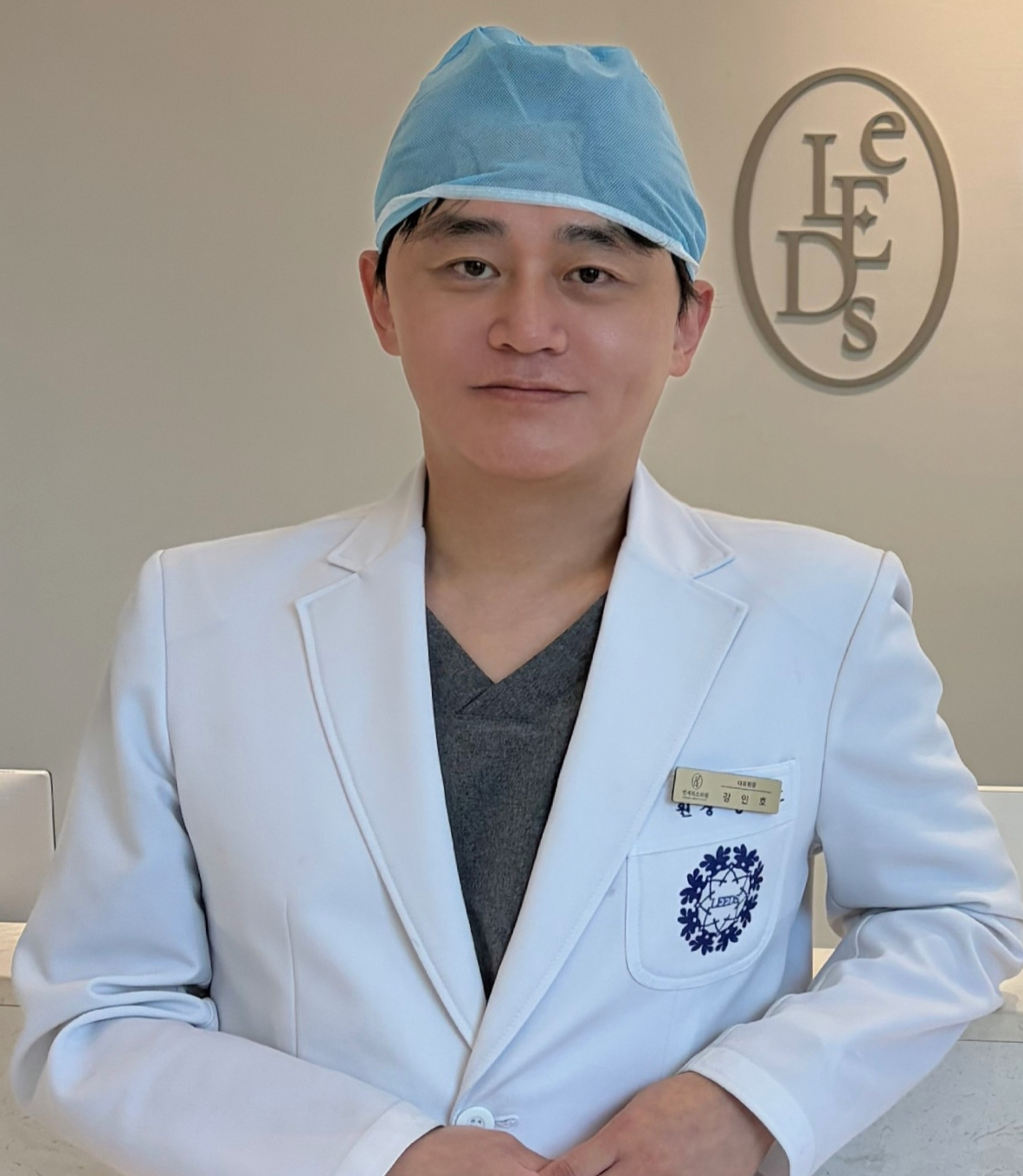
Dr. In-Ho Khang
Plastic Surgeon
Dr. In-Ho Khang is a board-certified plastic surgeon with focused expertise in facial anatomy and aesthetic contouring. His approach to nasolabial implant surgery is rooted in a commitment to holistic surgical planning — evaluating not only the fold itself, but how midface projection interacts with the nose, cheek, lip line, and overall facial profile before determining the optimal implant size, shape, and placement vector.
This comprehensive assessment is what separates surgeon-designed nasolabial augmentation from non-surgical or filler-based alternatives. Dr. Khang does not treat the nasolabial fold in isolation. He approaches each case as a question of facial balance — ensuring that the outcome looks naturally proportionate across the entire face, not like a localized fix.
At Yonsei Leeds Clinic, the philosophy is consistent: everyone has a beautiful moment, and the role of surgery is to reveal and preserve it — not to impose an artificial result.
Treatment Areas and Expected Improvements
Paranasal and nasolabial region: Implants placed in the paranasal zone provide direct structural augmentation at the base of the nose and along the adjacent maxilla. This reduces the depth of nasolabial folds by creating foundational support rather than simply filling overlying tissue. Patients typically notice a softer fold line and improved definition between the midface and perioral region. Results vary based on starting anatomy and implant selection.
Midface volume and projection: A flat or recessed midface creates the visual impression of deepened folds and a more aged facial appearance. Structural augmentation in this zone restores three-dimensional projection — the kind of volume that creates shadow, light, and facial depth. Improvement in this area tends to positively affect how the cheeks, eyes, and nose are perceived in proportion. No specific projection measurement can be guaranteed before surgical assessment.
Perioral and lip line balance: Patients with insufficient paranasal volume often experience a relative appearance of lip or mouth protrusion — even when the lips themselves are normally sized. By correcting the underlying structural deficit, nasolabial implant surgery can create a more balanced relationship between the midface and the lower face without any direct alteration to the lips. Individual results depend on preoperative anatomy and surgical planning.
Overall facial contour and profile: When correctly planned and placed, nasolabial implants contribute to a more refined and cohesive facial profile. The face reads as softer, more youthful, and more three-dimensional in both frontal and lateral views. Outcomes are influenced by implant type, patient anatomy, skin quality, and adherence to postoperative care protocols.
Treatment Process and Timeline
Step 1 — Initial consultation
Your first appointment with Dr. In-Ho Khang involves a detailed clinical assessment of your facial structure, nasolabial fold depth, midface projection, and overall facial proportions. Your concerns, goals, and medical history are reviewed in full. Dr. Khang will explain whether nasolabial implant surgery is appropriate and what outcome is realistically achievable for your specific anatomy.
Step 2 — Surgical planning and implant selection
If surgery is recommended, Dr. Khang will design a personalized surgical plan — determining implant type (silicone, Gore-Tex, or PEEK), shape, size, and precise placement vector. Planning is guided by the relationship between your midface, nose, cheek, and lip line, not by a standardized template.
Step 3 — Preoperative preparation
You will receive detailed preoperative instructions covering medications to avoid, fasting requirements, and any preparatory assessments needed. A pre-surgery appointment may be scheduled to review the plan and address any final questions.
Step 4 — The procedure
Nasolabial implant surgery is performed under appropriate anesthesia through small, carefully positioned incisions. Implants are placed precisely within the planned anatomical pocket. The procedure is performed without bone surgery. Incision placement is designed to minimize visible scarring wherever possible.
Step 5 — Immediate postoperative care
Following surgery, swelling and mild discomfort are expected and are normal responses to the procedure. The clinical team at Yonsei Leeds Clinic provides a structured recovery protocol, including guidance on activity restrictions, wound care, and follow-up scheduling.
Step 6 — Recovery and follow-up
Most patients experience the primary swelling phase in the first one to two weeks. A fuller sense of the result typically becomes visible as swelling resolves over the following weeks. Follow-up appointments are scheduled to monitor healing and assess the outcome. Individual recovery timelines vary.
Results, Safety, and Longevity
Nasolabial implants offer a significantly longer-lasting outcome compared to injectable fillers, as the implant remains in place structurally rather than being metabolized by the body. However, no surgical result should be described as permanent, and individual outcomes are influenced by anatomy, aging, weight changes, and other biological factors over time.
Biocompatible implant materials — silicone, Gore-Tex, and PEEK — are well-established in facial plastic surgery and have documented safety profiles when used appropriately by trained surgical teams. As with any surgical procedure, potential risks include swelling, bruising, infection, asymmetry, implant displacement, altered sensation, and the possibility of revision. These risks are discussed thoroughly during consultation so that patients can make fully informed decisions.
Dr. Khang's surgical planning is designed to minimize the risk of unnatural-looking results. Poorly planned nasolabial augmentation can produce an overfilled or artificial appearance — a risk that is reduced significantly when implant selection and placement are guided by a thorough understanding of total facial balance rather than isolated treatment of the fold.
Patients are advised to follow all preoperative and postoperative instructions carefully, to attend all scheduled follow-up appointments, and to consult Dr. Khang promptly if they have any concerns during recovery.
Why Choose Yonsei Leeds Clinic for Nasolabial Implant Surgery?
The nasolabial fold is one of the most aging features of the face — yet it remains one of the most undertreated because surface-level solutions consistently fall short. At Yonsei Leeds Clinic, nasolabial implant surgery is approached as a precision structural procedure, not a routine aesthetic filler appointment.
Dr. In-Ho Khang's surgical expertise in facial anatomy means that every case is evaluated in full context. He does not assess the nasolabial fold in isolation. He considers how midface projection interacts with the nose, cheek, lip line, and facial profile before recommending any intervention. This holistic, anatomy-first planning process is what ensures results read as naturally proportionate — avoiding the overdone or localized appearance that results from less rigorous surgical design.
Yonsei Leeds Clinic is equipped to serve both domestic and international patients seeking high-quality facial plastic surgery. The clinic's commitment to personalized care, transparent surgical planning, and structured postoperative support reflects the core belief that every patient deserves a result that is genuinely suited to them.
Key reasons patients choose Yonsei Leeds Clinic for nasolabial implant surgery:
- Surgeon-designed treatment plans tailored to each patient's full facial structure, not a standardized approach
- Biocompatible implant selection (silicone, Gore-Tex, PEEK) matched precisely to individual anatomy
- Non-bone surgery technique achieving three-dimensional contouring without skeletal alteration
- Meticulous incision planning designed to minimize visible scarring
- Comprehensive postoperative care programs supporting comfortable, well-monitored recovery
- Board-certified surgical expertise with deep specialization in facial anatomy and aesthetic contouring
What to Expect: Typical Treatment Journey
Patient A — Deep nasolabial folds, flat midface
A patient in her early forties had experienced progressive deepening of her nasolabial folds over several years and had previously tried dermal fillers without lasting satisfaction. Following consultation with Dr. Khang, she underwent silicone nasolabial implant placement tailored to her midface structure. As swelling resolved over the following weeks, she noted a softer fold line and a more three-dimensional midface appearance that she described as looking like herself — but rested and refreshed.
Patient B — Protruding mouth appearance, insufficient paranasal volume
A patient in his mid-thirties was concerned that his mouth appeared to protrude relative to the rest of his face, despite having normally proportioned lips. Clinical assessment revealed insufficient paranasal volume as the underlying structural cause. Nasolabial implant surgery provided the structural support needed to bring his midface and perioral region into better balance. He reported feeling more confident in profile photographs following recovery.
Patient C — International patient seeking structural correction
A patient traveling from abroad for consultation had researched nasolabial implant surgery extensively and was looking for a surgical team capable of precise, anatomy-guided planning. After a comprehensive preoperative assessment with Dr. Khang, a customized surgical plan was designed around her facial proportions. She completed surgery and her full recovery protocol before returning home, describing the clinical experience as thorough, transparent, and professionally managed throughout.
Illustrative examples. Individual results vary.
Ready to Restore Natural Midface Volume?
Schedule Your Consultation with Dr. In-Ho Khang
If you have been living with deep nasolabial folds, a flat or sunken midface, or a facial profile that fillers have not been able to adequately correct, a surgical consultation at Yonsei Leeds Clinic is the right first step. Dr. Khang will evaluate your facial structure in full, explain whether nasolabial implant surgery is appropriate for your anatomy, and outline what a realistic, personalized outcome would look like — without pressure, and without assumptions.
Yonsei Leeds Clinic welcomes both domestic and international patients. Contact the clinic directly to schedule your consultation and take the first step toward a naturally balanced, three-dimensional facial contour designed specifically for you.
Book Your Consultation Contact Yonsei Leeds Clinic for appointment scheduling and international patient inquiries.
Other Services
Explore additional treatments offered by our specialists.
Fat Grafting
Autologous fat grafting — also known as fat transfer — is a procedure that uses your own body fat to restore volume, contour, and proportion to areas that have become hollow, flat, or asymmetrical over time.
Learn More
Medical Skin Care
Medical skin care outcomes at Yonsei Leeds are designed to be progressive, biological, and sustainable.
Learn More
Acne Treatment
Acne treatment outcomes depend on the underlying cause, severity, and consistency of the patient's adherence to the program — both in-clinic and with any prescribed home care.
Learn More