Personalized Plastic Surgery & Aesthetic Care in Seocho-gu, Seoul

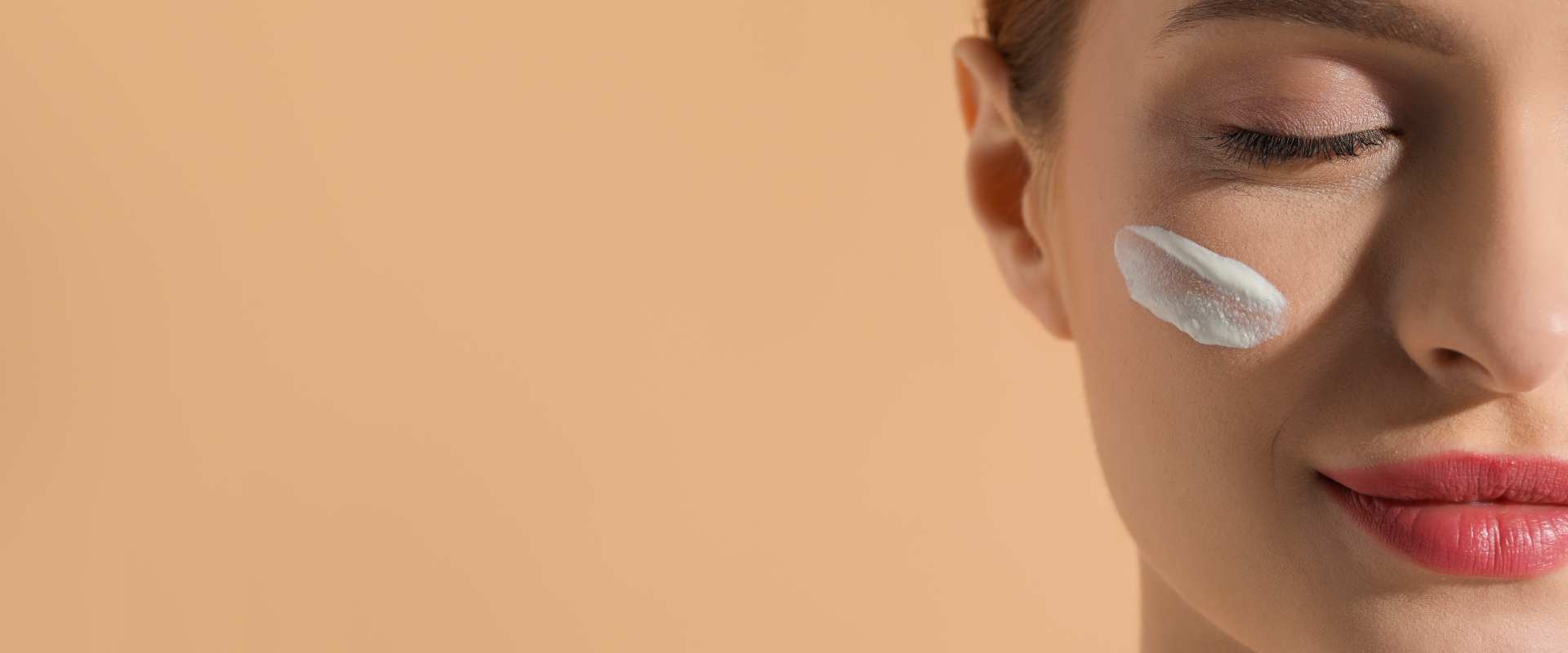
Medical Guide
Sun Protection and Aftercare After Laser Pigmentation
A practical aftercare and sun protection plan for the hours, weeks and months after laser pigmentation treatment in Seoul, including the flight home.
Schedule a ConsultationSun Protection and Aftercare After Laser Pigmentation
Medically reviewed by Dr. In-Ho Khang, MD, Yonsei University College of Medicine; Chief Academic Director of Plastic Surgery, Korean Society of Aesthetic Surgery & Laser (KSASL)
Sun protection after laser treatment is not something you add once the redness fades. It is a protocol you start the same afternoon and keep running for months, because the thing it prevents — new pigment arriving where you just removed old pigment — is set in motion during the window when the treated skin feels fine. This article walks through that protocol in order: the first days, the weeks between sessions, and the months after a course ends.
Aftercare Is a Protocol, Not a List of Suggestions
Most people read aftercare instructions the way they read a software license. That works out badly here, because the result is decided less by what happened in the treatment room than by what happens over the following weeks.
YONSEI LEEDS CLINIC in Seocho-gu, Seoul, describes its post-treatment guidance for pigmentation and tone correction as covering sun avoidance, recommended skincare to support healing, and avoidance of specified activities and skincare ingredients during recovery. For its laser services generally, it states that patients receive written aftercare guidance after each session covering skin care, sun protection and activity recommendations specific to the procedure, and that follow-up assessments during a multi-session course monitor the response so the protocol can be adjusted. For hair and tattoo removal, it states that the clinical team gives post-care instructions before the patient leaves, and that patients are told to protect the treated skin and avoid excessive irritation.
Those descriptions share a shape: instructions are procedure-specific, and the clinic reassesses as it goes. Read everything below as the reasoning underneath any individual instruction sheet. Yours is the one you follow.
What You Are Actually Preventing
The clinical reason has a name: post-inflammatory hyperpigmentation, usually shortened to PIH. The StatPearls review of the condition, published on the National Library of Medicine's Bookshelf, describes it as an acquired disorder following inflammation or injury, in which inflammatory signaling pushes pigment cells to overproduce melanin. That melanin is passed to surrounding cells in the surface layer, and where inflammation ran deeper, some ends up below, taken up by scavenging cells that hold on to it.
Two figures from that review are worth carrying with you. Surface-level PIH generally resolves or improves substantially over roughly six to twelve months. Deeper pigment improves slowly and can be permanent. The review also lists laser and light therapy among the injuries that trigger the condition, alongside burns, cryotherapy and chemical peels — the uncomfortable symmetry at the center of this topic. A treatment aimed at pigment is itself an inflammatory event. It further notes that recurrence is common without adequate photoprotection, and that overly aggressive treatment can produce irritation and further pigmentation.
Your aftercare therefore has two jobs: keep the inflammation from the session short, and keep new inflammatory input — light, heat, friction, harsh products — away from skin that is temporarily primed to respond to it.
The First Days: Treat the Barrier, Not the Spot
YONSEI LEEDS CLINIC describes the immediate response to its hair and tattoo removal lasers as possible mild redness, warmth, swelling, tingling and irritation on the day of treatment, typically settling within hours to about a day, with most patients returning to normal daily activities relatively quickly. Responses to pigmentation lasers vary by modality and by person, which is why its instructions are issued per procedure.
What does not vary is the principle. For the first stretch after a session the outer layer of your skin is doing repair work, and it is more permeable and more reactive than usual. The routine that serves it is deliberately boring:
- Cleanse with lukewarm water and the gentlest product you own. Skip anything that foams aggressively, anything granular, and any cloth or brush that scrubs.
- Moisturize more often than feels necessary. A simple, bland moisturizer applied several times a day is doing structural work, not cosmetic work.
- Do not pick, rub or exfoliate any crusting. The StatPearls PIH review is explicit that trauma to the area worsens the pigmentation and that patients should be taught not to pick at it.
- Judge products by sensation. The American Academy of Dermatology's melasma guidance puts this plainly: a product that burns or stings is irritating your skin, and that irritation can darken dark spots. Its guidance on fading dark spots in darker skin tones repeats the test and recommends gentler, fragrance-free products until the stinging stops.
That last rule is the most useful one here, because it requires no product knowledge. Discomfort is the signal. Act on it the first time rather than the third.
Actives: What to Stop, and When to Start Again
Most people arriving for pigmentation treatment already use something active — a retinoid, vitamin C, an exfoliating acid, a pigment-fading agent. These are usually paused around treatment and reintroduced one at a time, on the clinic's schedule.
There are two reasons for the pause. The first is barrier tolerance: an ingredient your skin handled easily last month can sting on skin that is mid-repair. The second is light sensitivity. The US Food and Drug Administration's consumer page on medicines and the sun explains photosensitivity as a chemically induced change that makes skin react to ultraviolet light with sunburn-like symptoms or rash, and separates phototoxicity, which can appear within hours of exposure, from photoallergy, which may surface days later. Its list of culprits includes retinoids, several antibiotics, oral contraceptives and estrogens, non-steroidal anti-inflammatory drugs, thiazide diuretics, certain antihistamines, statins and alpha-hydroxy acids in cosmetics.
Read that list with a treatment course in mind. Someone taking doxycycline for acne, or a statin, or an oral contraceptive, already has a lower threshold for a light-driven reaction before any laser is involved. The FDA notes that not everyone taking these will react — but it is worth telling the clinic what you take. Reintroduction is a staged process, not a single day: bring your product list and ask for the order and the dates.
What "Broad Spectrum" Covers, and What SPF Does Not Mean
Sunscreen guidance is repeated so often that the definitions get lost. Three of them matter here.
The FDA explains that SPF is tested by measuring how much ultraviolet exposure it takes to produce sunburn with the product on, compared with bare skin, which makes SPF primarily a UVB number. "Broad spectrum" is the separate label claim indicating UVA coverage as well. The agency recommends a broad-spectrum product at SPF 15 or above. For pigment-prone skin the Academy of Dermatology sets a higher floor: its melasma and dark-spot guidance both specify broad-spectrum, water-resistant protection at SPF 30 or above.
The second definition is the one people get wrong. The FDA states directly that SPF is not a measure of time outdoors — SPF 15 does not buy fifteen times longer in the sun, because SPF describes an amount of exposure, and the amount you receive varies with time of day, season, latitude, altitude and weather.
The third is visible light, which neither number covers. The Academy of Dermatology states that visible light has been shown to worsen melasma, particularly in people with darker skin tones, and recommends a tinted sunscreen containing iron oxide in addition to SPF 30 or higher; its dark-spot guidance makes the same recommendation for post-inflammatory pigmentation. It adds a detail that saves label-squinting: because iron oxide protects against visible light rather than ultraviolet, it appears among the inactive ingredients. The StatPearls photoprotection review supplies the mechanism — mineral filters such as zinc oxide and titanium dioxide reflect and scatter rather than absorb, and iron oxide can be added to improve that coverage. The same review notes that pigment in makeup contributes roughly SPF 3 to 4 on its own, fading within about four hours. Makeup is a supplement, not a substitute.
On reapplication, three authorities agree. The FDA advises applying about fifteen minutes before going out and reapplying at least every two hours, more often with swimming or sweating. The US Centers for Disease Control and Prevention gives the same two-hour rule and adds reapplication after toweling off. The Academy of Dermatology repeats the interval as a prevention measure specifically. The FDA also notes that water resistance is a tested claim limited to forty or eighty minutes, that no sunscreen is waterproof, and that a product with no printed expiration date should be treated as expired three years after purchase.
If you take one purchasing decision from this article, make it the tint: for skin just treated for pigmentation, a tinted mineral sunscreen is the more appropriate daily product.
The Light You Are Not Counting
Daily compliance tends to fail on the days that do not look like sun days. Three facts from public health authorities are worth memorizing.
Clouds are unreliable protection. The World Health Organization warns against underestimating ultraviolet passing through cloud, noting that thin cloud has little effect and can even raise levels locally through scattering, and that a long stay in open shade between buildings can still burn a sensitive person on a high-ultraviolet day. The CDC makes the matching point that ultraviolet reaches you on cool and cloudy days and that sun safety is a year-round matter.
Reflection adds to your total. The WHO describes grass, soil and water as reflecting under ten percent of incident ultraviolet, dry sand about fifteen percent, and fresh snow as nearly doubling exposure. A shaded café table beside a bright pavement is not the same as shade in a park.
Altitude raises intensity, by roughly ten percent for every thousand meters of elevation according to the WHO. That matters for a hiking trip and, as the next section explains, for the flight home.
For planning, the CDC points to the UV Index forecast and advises protecting your skin when it reaches three or higher, and notes that the strongest hours in the continental United States run from 10 a.m. to 4 p.m. daylight saving time. The FDA's narrower window is 10 a.m. to 2 p.m. Treat the wider one as the safer assumption while pigment is settling.
The Flight Home
Here is the scenario this section exists for. You have a session in Seoul on a Thursday and a long daylight flight on Saturday, with a window seat you chose for the view.
A meta-analysis of melanoma risk in airline pilots and cabin crew, published in JAMA Dermatology and available through the National Library of Medicine, summarizes aircraft window measurements from a Federal Aviation Administration report covering eight aircraft. Transmission of UVB through both glass and plastic windshields was under one percent. UVA was a different story: plastic blocked nearly all of it, while glass transmitted about fifty-four percent. The authors also give the altitude effect in aviation terms — roughly a fifteen percent rise in ultraviolet intensity per additional nine hundred meters, so that at nine thousand meters levels are approximately double those at the ground — and note that flying above thick cloud or snow fields raises them further.
That paper concerns occupational exposure across a career, and nothing in it says one flight will undo a treatment. But its components are all present on yours: glass that passes UVA, altitude that intensifies it, cloud tops that reflect it. For skin a few days post-laser the sensible response costs nothing. Close the shade on the sunlit side or pick a seat away from it. Apply tinted sunscreen before boarding and again mid-flight, which the two-hour interval would call for anyway. Cabin air is dry, so keep the bland moisturizer in the seat pocket. If you took an antihistamine to sleep or an anti-inflammatory for swelling, check it against the FDA's photosensitivity list before raising the shade. The same reasoning applies to the ordinary glass in your life once home: car side windows, office windows, a desk beside a south-facing pane.
Physical Measures Beat Product Compliance
Sunscreen is the measure people remember and apply too thinly. Hats, clothing and shade are harder to forget and do not wear off.
The StatPearls photoprotection review quantifies hats usefully. A brim wider than 7.5 centimeters provides an SPF of roughly 7 for the nose and 5 for the neck; a brim of 2.5 to 7.5 centimeters drops those to about 3 and 2; below 2.5 centimeters the protection is close to negligible. The CDC's advice matches: a brim all the way around beats a baseball cap, tightly woven fabric beats a straw weave with gaps, and darker colors may offer more.
On clothing, the review explains that fabrics are rated by ultraviolet protection factor, that darker fabrics outperform lighter ones, and that loose-fitting colored fabric is a strong everyday option. The Academy of Dermatology recommends looking for a stated UPF number on a wide-brimmed hat, and the CDC adds that a wet shirt protects less than a dry one. For the face, the combination that holds up is a wide brim, a tinted sunscreen, and the shaded side of the street.
Heat and Friction Are Separate Triggers
Light gets the attention, but two other inputs push treated skin toward inflammation, and neither is addressed by sunscreen.
Heat is the first. Hot showers, saunas, steam rooms, heated car seats, exercise that leaves the face flushed — all raise skin temperature and drive blood flow to the surface. YONSEI LEEDS CLINIC's published aftercare for pigmentation includes avoiding specified activities during recovery, and for its laser services generally it issues activity recommendations alongside skin care and sun protection. Ask which activities and for how long, and ask about the gym and the sauna specifically.
Friction is the second, and patients tend to discover it by accident. Rubbing with a towel rather than patting, a mask edge that chafes, sleeping face-down on a textured pillowcase, scrubbing off makeup at night. The StatPearls advice to avoid irritating the affected area covers all of it, and the clinic's instruction to its laser hair and tattoo removal patients — protect the treated skin, avoid excessive irritation — says the same in fewer words. Both inputs are worth removing from the first couple of weeks: removing them costs nothing, and a flare costs weeks.
Between Sessions, and After the Course Ends
Pigmentation treatment is a course, and the gaps between visits are part of the design rather than scheduling friction. YONSEI LEEDS CLINIC states that follow-up visits assess the skin's response and recalibrate treatment parameters, that energy levels, session frequency and protocol components are adjusted according to how the patient responded, and that settings are reassessed visit by visit rather than fixed for a whole course. It also states that LED phototherapy may be used after a laser session to support recovery and reduce irritation. Those adjustments have something to work from only if you executed the aftercare and can report honestly on what your skin did.
The clinic describes results as gradual and progressive, with tone improvement often noticed after early sessions, and states that superficial pigmentation such as freckles and sun spots generally responds faster than deeper and mixed pigment. Its approved claims for this market are careful: multiple sessions may be required, results vary, complete clearance is not guaranteed, and sun protection is important for maintaining improvement. It states that long-term maintenance depends on consistent year-round photoprotection, and that hormonally influenced conditions such as melasma may need periodic retreatment. The protocol becomes maintenance rather than ending.
Spotting a Flare Early, and Who to Tell
Early darkening is easier to address than established darkening. Watch for redness still present days after you were told to expect it gone; a brown or tan haze across the treated zone rather than in the original spots; discoloration following the outline of where the handpiece passed; itching or tenderness that is building rather than fading; and any blistering, oozing or crusting beyond what you were told to expect.
The clinic's published instruction is direct: follow the individualized aftercare guidance issued for your treatment, and contact the clinic if you experience unexpected or persistent skin changes during recovery. It states that international patients can receive remote follow-up after returning home for questions about skin response and next steps, that English-speaking support is available, and that online consultations are offered. Its inquiry and consultation page is the published route; clinic hours run Monday to Friday 10:30 a.m. to 8:00 p.m. and Saturday 10:00 a.m. to 4:00 p.m. Korea time, and Seoul runs roughly 13 to 17 hours ahead of the continental United States.
Photograph the area in consistent light every few days from the moment you leave. A sequence of images is far more useful to a clinician reading a message from eight time zones away than a description written at midnight. Yonsei Leeds Clinic is led by a single physician, Dr. In-Ho Khang, who earned his MD from Yonsei University College of Medicine and serves as Chief Academic Director of Plastic Surgery at the Korean Society of Aesthetic Surgery & Laser; the clinic states that he personally oversees every treatment, and his doctor profile is its published record of that background. It describes him as a board-certified specialist without naming the issuing board, so treat that as the clinic's own statement and ask to see the certificate at consultation. The clinic is registered with Korea's Ministry of Health and Welfare as a Medical Institution for Attracting Foreign Patients — a registration to treat international patients rather than a quality accreditation. Its services are described on the clinic website.
The Bottom Line
- Aftercare exists to prevent post-inflammatory hyperpigmentation; StatPearls describes surface-level PIH as taking roughly six to twelve months to fade and deeper pigment as potentially permanent.
- The FDA defines SPF as mainly a UVB measure and "broad spectrum" as the separate UVA claim; the American Academy of Dermatology adds tinted sunscreen containing iron oxide at SPF 30 or higher, because visible light also drives pigment.
- The FDA, the CDC and the Academy of Dermatology give the same reapplication interval of at least every two hours, and more often after swimming, sweating or toweling off.
- Heat and friction are triggers separate from light, and physical measures — a wide brim, UPF clothing, shade, a closed window shade on the flight home — do not wear off the way sunscreen does.
- YONSEI LEEDS CLINIC states that it issues written, procedure-specific aftercare, recalibrates parameters visit by visit, and offers remote follow-up after patients return home; it also states that complete clearance is not guaranteed and that year-round sun protection maintains improvement.
Frequently Asked Questions
Does regular sunscreen cover everything I need after laser pigmentation treatment?
Not entirely. The FDA explains that SPF primarily measures protection against UVB and that broad-spectrum labeling is what indicates UVA coverage. Neither addresses visible light, which the American Academy of Dermatology says can worsen melasma, especially in darker skin tones. The Academy recommends tinted sunscreen containing iron oxide at SPF 30 or higher for pigment-prone skin.
Do I really need sunscreen indoors or on an overcast day?
During a course of pigmentation treatment, yes. The World Health Organization cautions that thin cloud has little effect on ultraviolet and can even increase it locally through scattering, and the CDC notes that ultraviolet reaches you on cloudy and cool days year-round. Ordinary window glass transmits a meaningful share of UVA, so a desk beside a bright window counts as exposure.
Should I worry about the flight home from Seoul?
It is worth a small amount of preparation. A JAMA Dermatology meta-analysis of pilots and cabin crew cites Federal Aviation Administration measurements showing aircraft windshields transmitted under one percent of UVB, while glass passed roughly fifty-four percent of UVA, with intensity rising about fifteen percent per additional nine hundred meters. Close the shade and reapply tinted sunscreen mid-flight.
Why do I have to stop my retinoid and vitamin C?
Two reasons. Treated skin is mid-repair and tolerates actives poorly, and the sting that follows is itself a warning sign, since the Academy of Dermatology notes that products which burn or sting are irritating skin and can darken dark spots. Separately, the FDA lists retinoids and alpha-hydroxy acids among substances that can increase sensitivity to light. Ask your clinic for the reintroduction order and timing.
Is heat really a problem, or just a precaution?
Treat it as real for the first weeks. Saunas, hot showers, heated environments and flushing exercise raise skin temperature and surface blood flow at a point when the goal is keeping inflammation short. YONSEI LEEDS CLINIC states that its post-treatment guidance includes avoiding specified activities during recovery, so ask which ones apply to you and for how long.
How will I know if something is going wrong after I get home?
Look for redness persisting past the window you were told to expect, a brown haze across the whole treated area rather than the original spots, discoloration tracing the path of the handpiece, or discomfort that is building rather than settling. The clinic's published instruction is to contact it if unexpected or persistent skin changes occur, and it states that remote follow-up is available for international patients after they return home.
This article is for general informational purposes and does not constitute individualized medical advice, and it is not a self-diagnosis tool. Surgical candidacy, technique, and expected outcomes can only be determined through a consultation with a qualified plastic surgeon.
More Articles
Continue reading our clinical guides.
Why Korea Body Contouring Prices Stay Low Despite Global Inflation Rise
While global inflation has driven up the cost of surgical procedures in many Western markets, Korean body contouring clinics have maintained stable pricing through efficiency and modern liposuction protocols.
Learn More
Breast Fat Grafting Costs: Korea vs Japan Price Comparison 2026
Autologous breast fat grafting uses a patient's own fat cells to enhance breast volume and shape. Compare 2026 breast fat grafting costs and SVF systems in South Korea vs Japan.
Learn More
Body Lift Efficacy: 90% Satisfaction in Korean Reconstruction Studies
The human body undergoes profound structural modifications following significant weight loss, childbirth, or natural structural aging. Learn how high-precision body lift surgery in Korea achieves 90% patient satisfaction.
Learn More