Personalized Plastic Surgery & Aesthetic Care in Seocho-gu, Seoul

Medical Guide
Skin Booster Treatments by Decade: 20s, 30s and 40s
Skin booster treatments are matched to what skin needs at each decade. Here is what changes in your 20s, 30s and 40s, and how candidacy is truly decided.
Schedule a ConsultationSkin Booster Treatments by Decade: What Skin in Your 20s, 30s and 40s Actually Needs
Medically reviewed by Dr. In-Ho Khang, MD, Yonsei University College of Medicine; Chief Academic Director of Plastic Surgery, Korean Society of Aesthetic Surgery & Laser (KSASL)
Choosing a skin booster by age is a useful starting point and a poor finishing point. Skin does change in reasonably predictable ways across your 20s, 30s and 40s, and YONSEI LEEDS CLINIC in Seoul describes candidacy for its skin booster treatments in exactly those decade terms. But the clinic also states that the specific formulation is selected after a physician skin assessment, not from an age-based menu. This article explains what the research says changes in each decade, what the clinic describes offering, and the regulatory point that matters most if you live in the United States.
What a Skin Booster Is, and What It Is Not
YONSEI LEEDS CLINIC describes skin boosters as minimally invasive treatments that use micro-injections, or other delivery methods, to introduce hydrating, regenerative or collagen-stimulating ingredients into targeted layers of the skin. The stated distinction from topical skincare is straightforward: a cream works from the outside in, while a booster is placed within the skin.
The distinction from a dermal filler is more important and less often explained. A filler is placed to add volume and change contour in a specific location — a nasolabial fold, a cheek, a lip. A skin booster, as the clinic describes it, is not aiming at contour at all. It is aiming at skin quality: hydration, barrier function, elasticity, texture, pore appearance and radiance across an area. The two categories can be used in the same face for different purposes, but they answer different complaints.
That difference matters for expectations. If your concern is a deep fold or lost facial volume, a hydration-oriented booster is unlikely to be the answer, and a clinic that says so is being accurate rather than unhelpful. The clinic states plainly that skin booster results develop gradually, are not permanent, and vary according to skin condition, age, lifestyle, formulation and how closely you follow the recommended schedule.
What Actually Changes in Skin, Decade by Decade
Before matching treatment to decade, it helps to know what the underlying biology does. Two separate processes are at work, and confusing them leads people to treat the wrong problem.
The first is intrinsic aging: the slow, genetically driven change that happens to skin regardless of sun exposure. Histologic studies of sun-protected skin describe progressive thinning of the dermis, a decline in the number and activity of the cells that make collagen, and fragmentation of the collagen network that gives skin its mechanical strength. Work measuring dermal collagen across age groups reports a steady decrease in collagen density with advancing decades, alongside changes in how collagen fibers are organized. Reviews of skin aging mechanisms describe the same trajectory and link it to reduced production, increased breakdown, and accumulated cellular damage.
The second is extrinsic aging, dominated by ultraviolet exposure. Comparative studies of naturally aged versus sun-exposed skin describe photoaging as producing a distinct and generally more visible pattern: coarser wrinkling, uneven pigmentation, roughened texture, and disorganized elastic tissue. This is the process you have real control over, and it is the reason sun protection appears in almost every serious discussion of skin quality. The American Academy of Dermatology's public guidance on sunscreen sets out the practical baseline.
Barrier function follows its own curve. Research on transepidermal water loss — the rate at which water escapes through the outer layer of skin — and on age-related changes in the stratum corneum describes measurable shifts with age in how well the skin's outermost layer retains moisture and recovers after being disrupted. This is why "dry skin" in your 20s and "dry skin" in your 50s are often not the same complaint biologically, even though they feel similar.
Your 20s: Dryness, Dullness and Early Pore Enlargement
The clinic's stated candidacy for patients in their 20s is specific: increased dryness, dullness, or early pore enlargement.
Note what is not on that list. It does not say lines, laxity or volume loss, because for most people in their 20s those are not yet the dominant findings. The realistic goals in this decade are hydration, surface texture, barrier support and skin condition. The clinic also lists acne scars, enlarged pores, uneven texture, sensitized or fragile skin, dehydration and dullness among the concerns skin boosters may address, and several of those cluster in the 20s.
There is a case for restraint here that is worth hearing. Skin in the 20s often responds well to unglamorous fundamentals: consistent daily sun protection, a barrier-supporting routine, sleep, and treating active acne properly rather than late. The clinic's separate Skin Care & Rejuvenation service describes medically directed acne treatment, medical skin care using clinical-grade products selected by skin type and barrier function, and chemical peels for controlled exfoliation. For a 20-something whose main complaint is congestion, dullness or post-acne marks, one of those may be the more appropriate starting point, and the clinic states that the treatment is determined after clinical assessment rather than from a standard menu.
If a booster is indicated, hydration-oriented formulations are the category most often discussed for this profile. Published work on injectable hyaluronic acid used specifically for skin quality, rather than for volume, describes measurable improvements in hydration and surface parameters, though study designs and endpoints vary considerably and the evidence base is smaller than for volumizing use.
Your 30s: Early Fine Lines and Reduced Firmness
The clinic's stated candidacy for the 30s shifts to early fine lines, reduced firmness, or reduced elasticity.
This tracks the biology. By the 30s, cumulative collagen decline and early photoaging typically become visible as expression lines that linger slightly after the expression stops, and as a subtle loss of snap in the skin. The complaint is usually described as looking tired rather than looking old.
This is the decade in which the treatment conversation typically broadens from hydration to stimulation — that is, from adding water-binding material to prompting the skin to remodel. The clinic lists several formulations in this territory, including Rejuran Healer, which it describes for skin repair and barrier support, and JUVELOOK, which it describes for collagen stimulation using a porous poly-D,L-lactic acid structure.
The published science behind these categories is worth understanding in general terms. Polynucleotides and polydeoxyribonucleotide, often abbreviated PN and PDRN and typically derived from salmon DNA, have been studied for effects on tissue repair and regeneration; review articles describe proposed mechanisms involving cell activity and inflammation modulation. Poly-lactic acid materials, including poly-D,L-lactic acid and poly-L-lactic acid, are described in the literature as biodegradable polymers that provoke a controlled tissue response leading to collagen deposition over time. That same literature also documents adverse events: delayed granuloma formation — firm nodules developing weeks or months after injection — has been reported after poly-D,L-lactic acid injection. Any material that works by provoking a tissue response can, in some people, provoke more of one than intended.
The clinic states that skin boosters may be combined with radiofrequency microneedling, laser toning or lifting devices where appropriate, and that boosters themselves may be layered — for example, one formulation for collagen stimulation, another for barrier repair and a hydrating one for radiance — depending on the individual skin profile.
Your 40s and Beyond: Rejuvenation and a More Rested Appearance
For patients in their 40s and beyond, the clinic describes candidacy in terms of skin rejuvenation, improved skin quality, and a more lifted and rested appearance.
By this stage the changes are multi-layered. Dermal collagen density has continued to decline, photoaging has had decades to accumulate, and skin quality concerns increasingly coexist with contour and laxity concerns that no injectable aimed at skin quality is designed to solve. This is where honest expectation-setting does the most work.
A skin booster can plausibly influence hydration, texture, radiance, fine lines and skin quality — that is the clinic's stated benefit list, and it is a list about skin rather than about structure. It is not a substitute for a lifting procedure if the concern is descent of facial tissue, and it is not a substitute for volume replacement if the concern is hollowing. The clinic offers lifting and energy-based treatments and surgical options separately, and states that skin care can be coordinated with laser procedures, body contouring or facial surgery when clinically appropriate. The useful consultation question at this age is not "which booster," but "is skin quality actually my main finding, or is something structural driving what I see."
The clinic states that its treatment selection considers skin condition, age, lifestyle, previous treatments and individual concerns. Previous treatments matter more in this decade than earlier ones, simply because more people have a history to account for.
The Formulations the Clinic Describes Using
YONSEI LEEDS CLINIC states that it offers JUVELOOK, Rejuran Healer, Cell Exosome Therapy, Lilied M, Skin Booster Injection, BNV Biolab SMPF Injection and Salmon DNA Injection. It describes the underlying formulation technologies as cross-linked hyaluronic acid, PN and PDRN, and cell-derived or plant-derived exosome preparations, with BNV Biolab SMPF delivered using a micro-needling system.
On duration, the clinic publishes formulation-specific figures. It states that JUVELOOK improvement may begin to appear within three to four weeks, with noticeable results around the four-week mark; that Rejuran Healer effects are stated to last approximately six to twelve months; that Cell Exosome Therapy effects are stated to last approximately two to three months; that Skin Booster Injection effects are stated to last approximately four to six months; and that Salmon DNA Injection may produce visible improvement across five or more sessions, with results lasting approximately six to seven months after a full course. These are the clinic's own stated figures. Across all of them it states that results are not permanent and that maintenance sessions may be advisable.
Session structure varies by formulation as well. The clinic states that JUVELOOK and Rejuran Healer are typically recommended as three-session courses at four-week intervals, that Salmon DNA Injection and BNV Biolab SMPF Injection may be repeated every one to two weeks, and that Skin Booster Injection is typically recommended every six to twelve months. It states that Cell Exosome Therapy and BNV Biolab SMPF Injection take approximately ten minutes, while Skin Booster Injection takes approximately one hour.
Regulatory Status: The Part U.S. Readers Need
This section matters more than any comparison of formulations, and it is routinely skipped.
Regulatory approval is national. A product that is legally marketed for cosmetic use in Korea has not, by that fact, been evaluated or authorized for cosmetic use in the United States, and several injectable products in the skin booster category are not approved for cosmetic use here. The U.S. Food and Drug Administration maintains public pages on dermal fillers and soft tissue fillers and a separate list of FDA-approved dermal fillers, and those are the authoritative places to check what is actually cleared for use in the United States.
What this means in practice is threefold. First, nothing in this article should be read as stating that any product named above is FDA-approved or FDA-cleared, because that is not something the clinic claims and not something we can verify. Second, if you receive a treatment in Seoul, a U.S. physician may be unfamiliar with the specific product, so ask the clinic for the product name in writing and keep it. The clinic states that written treatment documentation is provided to international patients. Third, if a side effect appears after you return home, that written record is what makes it possible for a clinician here to help you sensibly.
None of this is an argument against treatment abroad. It is an argument for documentation, and for asking the question directly rather than assuming that availability implies U.S. approval.
How Candidacy Is Actually Decided
The clinic describes a three-step process. First, a one-to-one consultation covering skin concerns, history, previous treatments and goals. Second, a physician skin assessment evaluating elasticity, hydration, texture, scarring and overall skin health. Third, customized treatment planning, which may use a single formulation or a combination.
Dr. In-Ho Khang is the only physician the clinic profiles, and the clinic states that he personally oversees every treatment. His doctor profile page is the clinic's published record of his background; he holds an MD from Yonsei University College of Medicine and the clinic describes him as a board-certified specialist, without naming the issuing board, so treat that as the clinic's own statement and ask to see the certificate.
The clinic's published record has gaps worth knowing about. Its contraindications field for skin boosters is marked as needing clinic confirmation, meaning there is no published list of who should not have these treatments. Its stated answer on suitability is that you should inform the clinic about your current skin condition and any recent skin or aesthetic treatments so a medical professional can assess whether treatment is appropriate or should be postponed. As general practice, injectable treatments are typically deferred when there is active infection or inflammation in the treatment area, and pregnancy and breastfeeding, bleeding disorders, anticoagulant use, a history of keloid scarring and known allergies to a product's components are all standard items to disclose. Bring that list to your consultation rather than waiting to be asked.
Downtime, Aftercare and the Home Routine
The clinic states that temporary side effects may include mild redness, swelling, bruising or irritation depending on individual skin condition, and that these typically resolve naturally within about three to four days. It states most patients can return to daily activities immediately or within one to two days, and that for approximately one week after most injection treatments, patients are advised to avoid alcohol, smoking, saunas, steam rooms, high-temperature environments and strenuous exercise. Topical anesthetic cream is applied before treatment for comfort, and the clinic notes that protocols may vary slightly by treatment type.
Two of those restrictions collide with travel plans more often than people expect. A week without saunas, heat and hard exercise is easy at home and awkward if your Seoul trip was also meant to be a holiday. Plan the treatment for a point in the trip where the restriction is livable.
Aftercare beyond the first week is mostly your own routine, and this is where results are kept or lost. Because photoaging is the modifiable half of skin aging, daily broad-spectrum sun protection does more to preserve skin quality over years than any single course of injections. The clinic states that patients receive detailed aftercare guidance after each session covering skin care, sun protection and recovery expectations, and that international patients receive written aftercare documentation plus remote follow-up support after returning home.
Planning Multi-Session Courses From the United States
This is the practical problem with skin boosters and international travel, and it deserves its own thinking.
Several of the courses the clinic describes are not single appointments. Three sessions at four-week intervals spans roughly two months. Formulations repeated every one to two weeks assume you are nearby. A U.S. patient flying to Seoul for a week cannot complete such a course in one trip, and the honest options are limited: split the course across visits, plan the trip around a shorter protocol, or accept that a single session is a single session rather than a course.
The clinic does not publish a recommended minimum stay for skin boosters; that field is marked as needing clinic confirmation. Its published guidance is that international patients should confirm their return schedule with the clinic based on the treatment performed and their individual skin response, and should factor in any recommended follow-up appointment when arranging the return flight.
Ask three questions before booking. How many sessions does the plan you are proposing require? What happens to the result if I complete only part of it? And is there a protocol better suited to someone who cannot return in four weeks? A clinic willing to answer the second question candidly is telling you something about how it plans treatment. The clinic states that online consultation is available before travel and that English-language support is provided; its inquiry and consultation page is the published route for arranging that. Note that Seoul runs roughly 13 to 17 hours ahead of the continental United States, so schedule remote calls with that offset in mind.
The Bottom Line
- YONSEI LEEDS CLINIC describes skin booster candidacy by decade — dryness, dullness and early pore enlargement in the 20s; early fine lines and reduced firmness in the 30s; rejuvenation and a more lifted, rested appearance in the 40s and beyond — but states that the formulation is chosen after a physician skin assessment, not from an age menu.
- Skin boosters target skin quality rather than contour, so they are not a substitute for volume replacement or lifting if the underlying finding is structural.
- Regulatory approval is national: do not assume a product available in Korea is approved for cosmetic use in the United States, and ask for the product name in writing so a U.S. clinician can help you if a problem appears later.
- Several courses the clinic describes run to three sessions at four-week intervals or repeat every one to two weeks, which is difficult to complete in a single trip from the United States — ask how a partial course affects the result before you book.
- The clinic states results develop gradually, are not permanent and vary by individual, and that daily sun protection is part of the aftercare that preserves them.
Frequently Asked Questions
What age should I start skin boosters?
There is no evidence-based starting age, and the clinic does not publish one. It describes candidacy by skin finding rather than birthday: dryness, dullness or early pore enlargement in the 20s, early fine lines and reduced firmness in the 30s, and rejuvenation goals from the 40s. The more useful question is what your skin assessment shows, not what decade you are in.
Are skin boosters the same as dermal fillers?
No. Fillers are placed to add volume and change contour in a specific area. Skin boosters, as the clinic describes them, deliver hydrating or bio-stimulating ingredients into the skin to support hydration, elasticity, texture and overall skin quality across a region. They can be used in the same face for different purposes, but they address different complaints and should not be substituted for each other.
Are the products used in Korea approved in the United States?
Do not assume so. Regulatory approval is country-specific, and several injectable products in this category are not approved for cosmetic use in the United States. The FDA publishes lists of approved dermal fillers that show what is cleared here. Ask the clinic to give you the exact product name in writing so that a physician at home has the information if you need care later.
How long do skin booster results last?
The clinic publishes duration figures by formulation, ranging from a couple of months for some preparations to roughly six to twelve months for others after a full course. It states across all of them that results are not permanent, that they develop gradually, and that maintenance sessions may be advisable. Individual duration varies with skin condition, age, lifestyle and adherence to the recommended schedule.
How much downtime should I expect?
The clinic states most patients return to daily activities immediately or within one to two days, and that temporary redness, swelling, bruising or irritation typically resolves within about three to four days. It advises avoiding alcohol, smoking, saunas, steam rooms, high-temperature environments and strenuous exercise for about a week after most injection treatments, which is worth factoring into travel plans.
Can I finish a full booster course during a one-week trip to Seoul?
Often not. The clinic describes some courses as three sessions at four-week intervals and others as repeating every one to two weeks, neither of which fits a single short trip. Discuss this before booking flights so the plan can be split across visits, adapted to a shorter protocol, or reframed as a single session with correspondingly modest expectations.
Should I combine skin boosters with other treatments?
The clinic states that boosters may be layered with each other and may be combined with radiofrequency microneedling, laser toning or lifting devices where appropriate, and that skin care can be coordinated with laser procedures or surgery when clinically appropriate. Whether combining suits you depends on your skin assessment, and the clinic states this is determined during consultation rather than assumed.
What should I tell the clinic before treatment?
Give a full account of your current skin condition, any recent skin or aesthetic procedures, your medication list including blood thinners, any history of keloid or abnormal scarring, known allergies, and whether you are pregnant or breastfeeding. The clinic states that treatment suitability is assessed individually and that treatment may be postponed depending on your circumstances, so complete disclosure protects you.
This article is for general informational purposes and does not constitute individualized medical advice, and it is not a self-diagnosis tool. Surgical candidacy, technique, and expected outcomes can only be determined through a consultation with a qualified plastic surgeon.
More Articles
Continue reading our clinical guides.
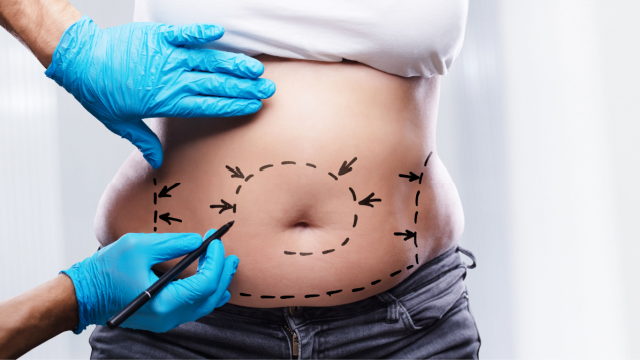
Why Korea Body Contouring Prices Stay Low Despite Global Inflation Rise
While global inflation has driven up the cost of surgical procedures in many Western markets, Korean body contouring clinics have maintained stable pricing through efficiency and modern liposuction protocols.
Learn More
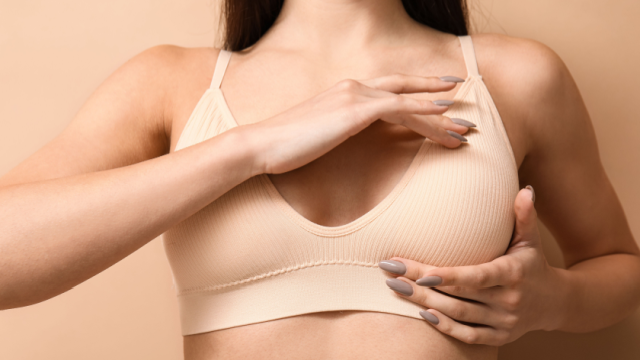
Breast Fat Grafting Costs: Korea vs Japan Price Comparison 2026
Autologous breast fat grafting uses a patient's own fat cells to enhance breast volume and shape. Compare 2026 breast fat grafting costs and SVF systems in South Korea vs Japan.
Learn More
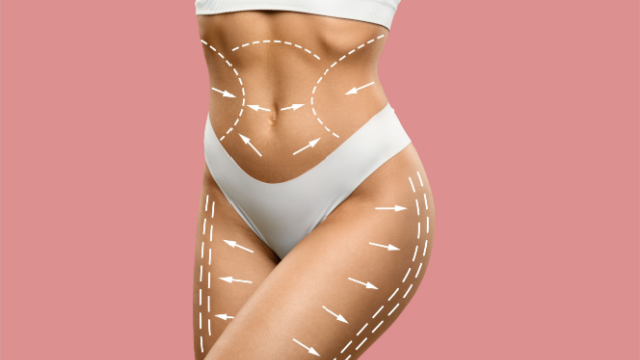
Body Lift Efficacy: 90% Satisfaction in Korean Reconstruction Studies
The human body undergoes profound structural modifications following significant weight loss, childbirth, or natural structural aging. Learn how high-precision body lift surgery in Korea achieves 90% patient satisfaction.
Learn More