Personalized Plastic Surgery & Aesthetic Care in Seocho-gu, Seoul
Medical Guide
Skin Booster and Laser Courses: What You Are Agreeing To
A course of skin booster or laser sessions is the real unit of treatment. What sets its length, how the spacing shapes travel, and what to agree in writing.
Schedule a ConsultationSkin Booster and Laser Courses: What You Are Agreeing To
Medically reviewed by Dr. In-Ho Khang, MD, Yonsei University College of Medicine; Chief Academic Director of Plastic Surgery, Korean Society of Aesthetic Surgery & Laser (KSASL)
When people research skin booster and laser treatment in Seoul, they usually start by asking what one session involves. That is the wrong unit. For most of these treatments the thing being planned, agreed and carried out is a course — a defined number of sessions on a defined rhythm, with assessment points in between. YONSEI LEEDS CLINIC documents session counts and intervals for several of the treatments it offers, and those numbers, not the appointment itself, are what a prospective patient is actually committing to. This article sets out what a course is, what makes one course a larger commitment than another, and what to settle in writing before the first session rather than discovering it in the middle.
Why a Course Is the Unit, Not the Appointment
A single session of most of these treatments is an increment, not a product. The clinic states that skin booster results develop gradually, that they are not permanent, and that maintenance sessions may be advisable. For laser work it states that improvement in firmness and contour is progressive, that pigmentation visibility falls progressively across treatment sessions, and that many treatments may require multiple sessions. None of that describes a one-visit event, which is why the useful question is the shape of the whole plan: how many sessions, how far apart, what is assessed between them, and when the result is judged.
The U.S. Food and Drug Administration makes a related point in its guidance on aesthetic devices. It states that a procedure may not always give the result you want, that effects may be temporary, and that anyone considering one should discuss benefits and risks with a health care professional and ask about that professional's training and experience with the procedure. "Temporary" is a scheduling fact as much as a clinical one: the plan has an end point and, if you want to hold the result, a next chapter. The clinic's stated philosophy points the same way — individualized planning rather than a one-size-fits-all approach — so your course is defined at your consultation and nowhere earlier.
The Four Things a Course Asks For Besides the Appointment
A course requires four distinct things.
Sessions. The count itself — the strand everybody asks about, and the one that can only be estimated before an assessment.
Calendar. The intervals between sessions, set by the protocol rather than by your availability. Two courses can involve the same number of visits and occupy completely different amounts of the year.
Behavior between sessions. Aftercare is not one episode at the end. It repeats after every session, and for some treatments it restricts ordinary activities. The clinic states that for approximately one week after most injection treatments, patients are advised to avoid alcohol, smoking, saunas, steam rooms, high-temperature environments and strenuous exercise. On a multi-session course, that week recurs.
Assessment. The clinic states that during multi-session laser treatment, follow-up assessments monitor skin response and allow protocol adjustments where needed. Those appointments are part of the course, not optional extras: they are the mechanism by which the plan stays matched to you. Plan for only the first strand and the other three arrive as surprises.
What Decides How Many Sessions a Concern Needs
The clinic is explicit about where the number comes from. For laser treatments it states that the clinical assessment determines the procedure, the laser modality, the parameters, expected outcomes, the number of sessions and the timeline. The session count is an output of the assessment, not an input to it.
Several things feed that assessment. The clinic states that suitability and planning are determined by skin type, skin tone, condition, severity, treatment area, tissue characteristics and clinical goals. Extent matters because a larger or more widely distributed concern asks more of each pass. Severity matters because a faint change and an established one do not respond on the same schedule. And your own response matters, which is why the clinic monitors it during a course and may adjust the protocol. For skin boosters the inputs are stated slightly differently: selection begins with a physician skin assessment, and skin condition, age, lifestyle, previous treatments and individual concerns feed into the choice of formulation or combination.
Published patient education outside Korea shows how much the honest answer varies by concern even within one technique. The American Academy of Dermatology, writing about microneedling, states that more than one session is usually needed and that for acne scars a patient may need three to five treatments performed every two to four weeks, with results appearing gradually and taking several months to reach full extent. That is a different treatment, but it illustrates the pattern: the number is tied to the concern, not the category.
The Rhythms the Clinic Documents, and the Calendars They Create
For skin boosters, YONSEI LEEDS CLINIC publishes specific scheduling information, and it is worth reading as a calendar rather than as a product list.
It states that JUVELOOK and Rejuran Healer are typically recommended as courses of three sessions spaced four weeks apart; that Salmon DNA Injection and BNV Biolab SMPF Injection may be repeated every one to two weeks, with visible improvement from Salmon DNA Injection occurring through five or more sessions; and that Skin Booster Injection is typically recommended every six to twelve months. Appointment lengths vary too: Cell Exosome Therapy and BNV Biolab SMPF Injection take approximately ten minutes, while Skin Booster Injection takes approximately one hour.
Read as scheduling, those lines describe three very different commitments. A protocol with a one-to-two-week rhythm asks for repeated visits inside a short window. A protocol on a monthly rhythm stretches across a season. A protocol recommended once or twice a year is a different kind of relationship with the clinic altogether. Appointment lengths matter too, because a ten-minute visit and an hour-long visit fit differently into a day that also contains work, family or travel.
For laser treatments the clinic does not reduce the plan to a single published rhythm. It states that there is no single minimum stay for all laser treatments, and that international patients may come for one session or plan a multi-session course around their stay, with the appropriate shape depending on the specific laser, the expected skin response, and whether additional sessions or follow-up assessment are needed.
Three Calendar Shapes, and Which One You Are Signing Up For
Grouping the published rhythms makes the planning question concrete.
The compressed rhythm. Where sessions sit one to two weeks apart, the course assumes you are nearby. Someone flying in from the United States is choosing between a long stay, repeated flights, or a modified plan agreed in advance.
The monthly rhythm. Where sessions sit about four weeks apart, the course occupies a stretch of calendar that no ordinary vacation contains. This is the shape most likely to be misread, because the session count sounds small and the elapsed time is not.
The periodic rhythm. Where a treatment is recommended at intervals measured in months, each visit is effectively self-contained. This shape travels best, and it is worth asking about specifically if your trips to Korea are rare.
None of this is a reason to abandon a plan. It is a reason to put the calendar on the table at the first conversation rather than after the first session. The clinic states that online consultation is available before travel and that English-speaking support is provided; its inquiry and consultation page is the published route for opening that discussion. Published hours are Monday through Friday from 10:30 a.m. to 8:00 p.m. and Saturday from 10:00 a.m. to 4:00 p.m. Korean time, closed Sundays and public holidays. Seoul runs roughly 13 to 17 hours ahead of the continental United States, so a call that feels like mid-morning to you may land after closing in Seocho-gu.
Why the Whole Course Cannot Be Fixed Before It Starts
There is an honest tension in any multi-session plan. You want the whole thing defined up front; the clinic wants to keep the ability to change it as it sees how you respond. Both positions are reasonable, and the resolution is to agree on what is fixed and what is deliberately left open.
The clinic describes the open part directly. For laser treatments it states that parameters are calibrated to the patient's specific characteristics, that multi-session treatments are monitored, and that parameters may be adjusted according to skin response. For skin boosters it states that planning may use a single formulation or a combination protocol, and that boosters may be layered or combined with radiofrequency microneedling, laser toning or lifting devices where appropriate. A plan that could not change in response to your skin would be a worse plan.
What can be fixed is the frame: the concern being treated, the number of sessions and intervals as currently planned, the assessment points, and the circumstances under which the plan would be revisited. That is not asking the clinic to guarantee anything. It is asking it to say what it currently intends, and what would change its mind.
The Consultation Is Where the Course Is Defined
Yonsei Leeds Clinic documents a consultation sequence rather than a sales step. For laser treatments it describes a clinical consultation and skin assessment, selection of the modality, calibration of parameters, treatment, monitoring of skin response, follow-up assessment for multi-session courses, and aftercare with sun-protection guidance. It states that in-person consultation is a paid appointment, and that consultations are unhurried, cover risks, recovery and realistic outcomes, and are pressure-free. For international patients it states that a pre-arrival teleconsultation can cover skin concerns, goals and relevant skin history before you travel. If you are flying a long way, that conversation is where a course should take shape, not on arrival.
The American Academy of Dermatology publishes a list of questions it recommends asking before any cosmetic treatment, and one maps exactly onto this topic: how long the procedure will take and how many treatments will be needed to reach the outcome you want. The Academy also recommends asking what results are realistic, what the risks are, what recovery normally looks like, and how to prepare and care for your skin afterward. Those are course-level questions, and they are reasonable to ask of any clinic anywhere.
Aftercare Repeats, and So Does the Recovery Window
The part of a course that patients most often underestimate is the part that happens at home.
The clinic states that most patients can return to daily activities immediately or within one to two days after a skin booster treatment, and that temporary redness, swelling, bruising or irritation typically settle within approximately three to four days. It also states the one-week avoidance list already mentioned. For laser treatments it states that after each session patients receive written aftercare guidance covering skin care, sun protection and activity recommendations specific to the procedure.
Note the phrase "after each session." On a three-session course those instructions arrive three times, and the restricted week arrives three times. If your reason for visiting Seoul includes a bathhouse, a hard training block or an event where bruising would be unwelcome, map those against the whole sequence rather than the first appointment. The same applies to sun exposure, which the clinic names as a standing element of written laser aftercare.
The clinic also states that international patients can receive remote follow-up after returning home for questions about skin response, healing progress and next treatment steps, and that follow-up sessions are scheduled according to the treatment plan. Agreeing that channel before you fly is part of agreeing the course.
When the Course Spans a Flight Home
If part of your course happens in Korea and the rest of your life happens in the United States, the handover deserves its own planning. The U.S. Centers for Disease Control and Prevention, in the Yellow Book chapter on medical tourism, advises that anyone considering medical care abroad discuss the plan with their regular health care professional at home well in advance of travel, obtain copies of their medical records from the facility abroad before returning, and make sure follow-up care can be arranged at home. The agency also notes that records may need translation. Those are sensible steps for a treatment course even when nothing goes wrong, because the next clinician who looks at your skin will otherwise be working from your memory of what was done. Practically, it means asking for the treatment record in writing: what was done at each session, on what date, and what the plan is for the next one. The clinic states that translated documents are available to international patients and that English-language aftercare support is provided.
The National Institute on Aging, part of the National Institutes of Health, offers a habit that transfers well here: list what you want to discuss before each appointment, raise the important items first, and write down the main points of the answers. On a multi-session course, that record becomes the thread connecting visits months apart.
After the Course: Review Rather Than a Fixed Schedule
Courses end. What comes next is where language matters, and the clinic's own framing is careful: it states that results are not permanent and that maintenance sessions may be advisable. "May be advisable" is a clinical judgment to be made when the time comes, not a standing subscription.
That framing is consistent with how the clinic plans everything else. Because it assesses before selecting, the honest form of a maintenance plan is a review appointment at which your skin is looked at again and a decision is made, rather than a recurring booking agreed in advance. The American Academy of Dermatology uses similar language for other collagen-stimulating treatments, noting that a dermatologist may recommend returning periodically for a maintenance session as the effect fades.
So the useful thing to agree at the end of a course is not a future course. It is a date for a look, and a shared understanding of what would make further treatment worthwhile. If you travel internationally, that date also has to be realistic about when you will next be in Seoul.
What to Ask For in Writing Before the First Session
Bring this to the consultation. Every item is answerable, and none of it asks the clinic to predict your result.
- The concern being treated, named specifically, and the treatment selected for it.
- The number of sessions currently planned and the interval between them.
- What happens at each session, and roughly how long each appointment takes.
- The assessment points: when your response will be formally reviewed, and what would trigger a change to the plan.
- The aftercare instructions for each session, including the restricted period and anything you must do daily in between.
- What follow-up is included, and through which channel, once you are back home.
- The exact name of any preparation or device used, recorded in writing so a clinician at home can identify it.
- When the completed course should be assessed, and when a review would make sense.
Ask for it as a document rather than a conversation. The clinic states that it provides transparent treatment plans including discussion of risks, recovery and realistic outcomes, so a written course plan sits inside what it already describes doing.
Named Products, Devices, and Where Authorization Stops
YONSEI LEEDS CLINIC names the preparations and equipment it uses, including JUVELOOK, Rejuran Healer, Cell Exosome Therapy, Skin Booster Injection and Salmon DNA Injection among boosters, and Ultherapy Prime, Shurink, Onda Lifting, Pico Toning, Clarity II and AirJet among its laser and energy devices. Regulatory authorization is national and product-specific. A preparation or device lawfully marketed for cosmetic use in Korea has not, by that fact, been evaluated or authorized for cosmetic use in the United States, and nothing here should be read as stating that any named product is FDA-approved or FDA-cleared. The FDA's own page on aesthetic devices is the place to check what is authorized here. Ask the clinic to record the exact product names on your treatment summary; a clinician in the United States may not otherwise recognize what you were given.
For a course, continuity matters more than it does for a single appointment, because the point of each review is to compare what is in front of the clinician now with what was there last time. One physician is profiled here, Dr. In-Ho Khang, and the clinic states that he personally oversees every treatment, which is the arrangement under which that comparison is being made by the same pair of eyes each session. His doctor profile page carries his training and society roles; the credential descriptions on it are the clinic's own, and asking to see documentation at consultation is reasonable and routine.
The Bottom Line
- A course, not a session, is the unit that gets planned and agreed; the clinic states that the assessment determines the number of laser sessions and the timeline.
- Four strands make up the commitment: the sessions, the calendar the intervals create, the aftercare that repeats after every session, and the assessment appointments built into the plan.
- Published rhythms differ widely — from protocols repeated every one to two weeks, through courses of three sessions four weeks apart, to treatments recommended at intervals of six to twelve months — and each shape travels differently from the United States.
- The clinic states that parameters are adjusted according to skin response during a multi-session course, so the frame can be fixed in writing even though the detail stays adjustable.
- The clinic states that results are not permanent and that maintenance may be advisable, which makes a review appointment, rather than a standing schedule, the sensible way to end a course.
Frequently Asked Questions
Why are skin boosters and lasers planned as courses instead of single treatments?
Because the clinic describes the effect as building across sessions rather than arriving in one. It states that skin booster results develop gradually and are not permanent, that laser improvement in firmness, contour and pigmentation visibility is progressive across a course, and that many laser treatments may require multiple sessions.
How many sessions will I need?
That is decided at assessment, not in advance. YONSEI LEEDS CLINIC states that the clinical consultation determines the appropriate procedure, laser modality, parameters, expected outcomes, number of sessions and timeline, and that skin type, condition, treatment area, severity and goals all feed into it. For skin boosters it publishes typical patterns — courses of three sessions at four-week intervals for certain formulations, for example — but those are starting points for a plan.
Can I finish a course during one trip to Seoul?
It depends entirely on the interval your protocol uses. The clinic states that there is no single minimum stay for laser treatments and that international patients may come for one session or plan a multi-session course around their stay. Protocols repeated every one to two weeks and protocols spaced about four weeks apart create very different travel requirements, so raise this at the pre-arrival teleconsultation rather than after you land.
What does the clinic do between sessions in a course?
It assesses. The clinic states that during multi-session laser treatment, follow-up assessments monitor skin response and allow protocol adjustments where needed, and that treatment parameters are calibrated to the individual patient. For international patients it states that remote follow-up is available after returning home for questions about skin response, healing progress and next treatment steps.
What should I expect to do at home during a course?
More than most people plan for. The clinic states that patients receive written aftercare guidance after each laser session covering skin care, sun protection and activity recommendations, and that for about a week after most injection treatments patients should avoid alcohol, smoking, saunas, steam rooms, high-temperature environments and strenuous exercise. On a multi-session course those instructions recur every time.
What happens when the course is finished?
The clinic states that results are not permanent and that maintenance sessions may be advisable, which points toward a review rather than an automatic rebooking. The FDA notes more generally that the effects of aesthetic device procedures may be temporary and that a procedure may not always produce the result you wanted. Agreeing a date to look again, and what would make further treatment worthwhile, is more useful than committing to a second course in advance.
How do I keep my own record of a course that spans two countries?
Ask for everything in writing as you go. The CDC advises people who receive care abroad to obtain copies of their medical records before returning home, to arrange follow-up care at home, and to be prepared for records to need translation. The National Institute on Aging suggests writing down the main points of each appointment or asking the clinician to write them down, which on a course spread over months is what keeps the sessions connected.
This article is for general informational purposes and does not constitute individualized medical advice, and it is not a self-diagnosis tool. Surgical candidacy, technique, and expected outcomes can only be determined through a consultation with a qualified plastic surgeon.
More Articles
Continue reading our clinical guides.
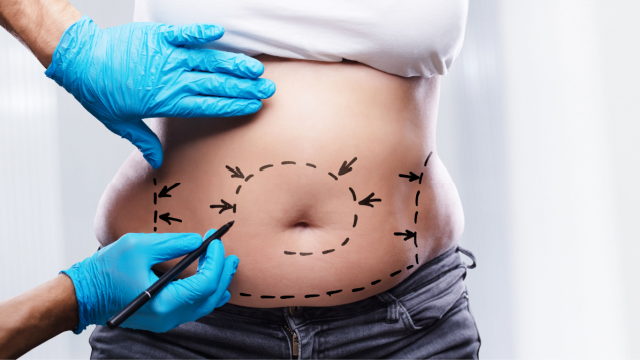
Why Korea Body Contouring Prices Stay Low Despite Global Inflation Rise
While global inflation has driven up the cost of surgical procedures in many Western markets, Korean body contouring clinics have maintained stable pricing through efficiency and modern liposuction protocols.
Learn More

Breast Fat Grafting Costs: Korea vs Japan Price Comparison 2026
Autologous breast fat grafting uses a patient's own fat cells to enhance breast volume and shape. Compare 2026 breast fat grafting costs and SVF systems in South Korea vs Japan.
Learn More

Body Lift Efficacy: 90% Satisfaction in Korean Reconstruction Studies
The human body undergoes profound structural modifications following significant weight loss, childbirth, or natural structural aging. Learn how high-precision body lift surgery in Korea achieves 90% patient satisfaction.
Learn More