Personalized Plastic Surgery & Aesthetic Care in Seocho-gu, Seoul

Medical Guide
Realistic Plastic Surgery Results in Korea: What to Expect
How a realistic result from plastic surgery in Korea is defined, why two people with the same operation end up differently, and how time changes an outcome.
Schedule a ConsultationRealistic Plastic Surgery Results in Korea: What to Expect
Medically reviewed by Dr. In-Ho Khang, MD, Yonsei University College of Medicine; Chief Academic Director of Plastic Surgery, Korean Society of Aesthetic Surgery & Laser (KSASL)
People searching for realistic results from plastic surgery in Korea are usually asking two questions at once: how much change is possible, and how much of it will still be there in five years. Neither has a single answer, because a result is not a product that arrives finished on the day of surgery. It is a change to one part of your anatomy, made inside limits set by what the operation can reach, how your tissue responds, and what time does afterward. This article sets out how those limits work and how an expectation gets built.
What "A Realistic Result" Actually Means
A realistic expectation is not a smaller version of a dramatic one. It is a different kind of statement: a description of what a specific operation does to a specific body, bounded on three sides.
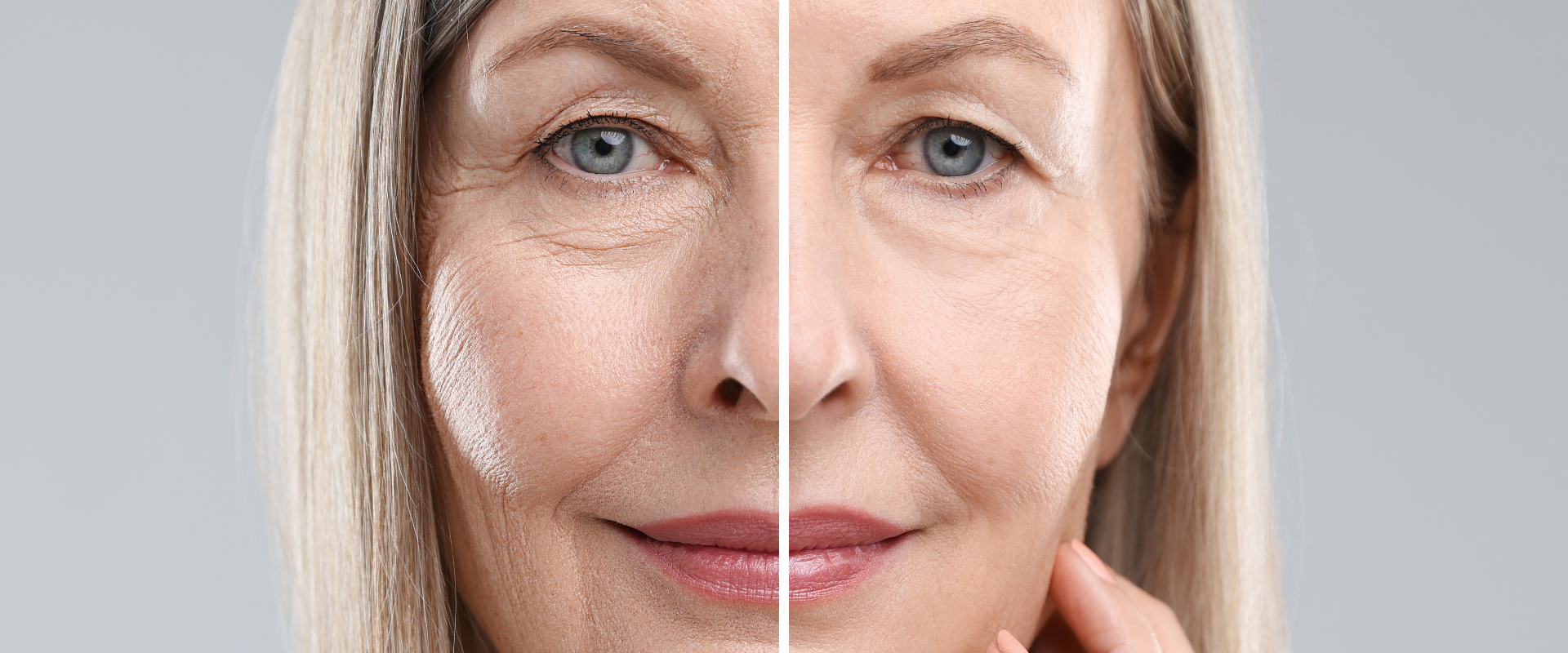
The first bound is scope. The American Society of Plastic Surgeons, writing about facelift surgery, describes it as restorative — it does not alter your fundamental appearance and cannot halt aging. Cleveland Clinic makes the same two points, adding that a facelift leaves superficial wrinkles, sun damage and unevenness in skin color untouched, because those are problems of the skin surface rather than of the structures underneath.
The second bound is certainty. ASPS, on its body contouring results page, states the position without decoration: a good result is expected but not guaranteed, and in some cases a single operation will not reach the optimal outcome and a further procedure may be needed. That is a professional society speaking, not a clinic's disclaimer.
The third bound is time. ASPS notes that the results of body contouring are visible almost at once, but that two years or more can pass before the final result is settled. An outcome judged at week three is not an outcome; it is swelling.
YONSEI LEEDS CLINIC in Seoul works inside those same bounds. For its anti-aging surgery it states that results vary with anatomy, degree of aging, skin quality, healing and which procedures were performed, and that surgery does not stop future aging. For body contouring it states that results vary with anatomy, skin quality, the procedure selected and individual healing, and that the treatment is not a general weight-loss method.
What the Operation Changes, and What It Leaves Alone
The most common source of disappointment is not a poor result. It is a correct result to a question the patient was not actually asking. Every operation has a target tissue and an address. The clinic describes body contouring as a response to localized fat, loose skin, contour irregularities and proportion concerns that diet and exercise have not resolved, and the benefits it publishes are correspondingly specific: reduction of localized fat, improved proportions, better definition in the treated areas, improvement of loose skin where that is appropriate, refinement of the overall body line, and added breast volume using the patient's own fat. Each of those is a change to a contour, not to body weight.
Facial anti-aging surgery has an equally defined address. The clinic describes it as treatment for structural change — skin laxity, descent of tissue, shifts in the facial fat compartments, loss of jawline and neck definition — and lists its published benefits as improved jawline definition, reduced prominence of jowls, elevation in the cheek and mid-face, smoother neck contours, improved brow position, a refreshed appearance around the eyes, and better overall facial balance.
Read those two lists and a pattern appears. They describe position and volume. They do not describe skin texture, pigment or fine surface lines, and ASPS and Cleveland Clinic both state that lifting surgery does not address those. ASPS adds the converse: minimally invasive treatments cannot produce the result of surgery, although they may delay the point at which surgery becomes relevant. Expecting one category to deliver the other's result is the most predictable way to be unhappy with a sound outcome.
Contour and Identity Are Different Things
A second misalignment sits underneath the first. Patients often describe the result they want in terms of identity — looking rested, looking like themselves again — while surgery is planned in terms of contour. The two are related but are not the same measurement, and the gap between them is where expectation quietly goes wrong.
ASPS is explicit that a facelift does not change your fundamental appearance. That reads as a limitation, and it is one, but it is also a reassurance: the features that make you recognizable are not what the operation moves. YONSEI LEEDS CLINIC states that its anti-aging surgery aims at natural-looking results that preserve the patient's identity, and that it prioritizes harmony and balance rather than dramatic change. That is the clinic's stated aim, in its own words.
The practical consequence is this. If what bothers you is a contour — a jawline that has softened, a flank that will not respond to training — surgery has a plausible address for it. If it is a more general sense of not looking like yourself, the first job of a consultation is to find out which contour, if any, carries that feeling. Sometimes the answer is that no single operation carries it.
Why "Natural, Harmonious and Balanced" Is a Planning Constraint
"Natural-looking results" appears on the website of almost every aesthetic clinic, which has made it easy to hear as a slogan. Used clinically, it is a constraint on quantity rather than a description of a style.
Dr. In-Ho Khang's published statement of his own approach puts the emphasis exactly there. He holds that anatomy, goals and circumstances differ from one patient to the next, so treatment should not run to a single standard template, and that careful consultation and individual planning are what produce a result that looks natural and keeps the face and the body in harmony with themselves.
A constraint of that kind changes the arithmetic of a plan. The answer to "how much can be removed from this area" is not the maximum the tissue would tolerate; it is the amount that leaves the area in proportion to everything next to it. A patient expecting the maximum who hears a smaller number can read that as caution, when it is the proportion rule doing its job before the operation rather than after it.
It is also why the clinic describes assessing body composition, skin quality, anatomy, medical history and goals before selecting a body treatment, and skin laxity, volume loss, underlying structures, general health and lifestyle before facial surgery. Those assessments exist to place a change in context, which is the only place where "balanced" can be measured at all.
Why Two People Having the Same Operation Get Different Results
This is the question behind most of the others. It has four answers.
Anatomy and starting point
The same operation performed on two people begins from two different places. The clinic states that suitability and expected outcome are determined individually after assessment of anatomy, body composition and clinical circumstances — another way of saying that the operation is a constant and the input is not. ASPS illustrates this in its body contouring material: after major weight loss, skin and tissue frequently lack the elasticity to shrink back to the smaller body, which is why removing skin becomes the relevant operation rather than removing fat.
Skin quality
Skin is the surface every underlying change has to show through, and it varies enormously between people of the same age. Cleveland Clinic notes that the strongest candidates for facelift surgery still retain some skin elasticity, and that while most patients are in their forties to sixties, people outside that range can also be suitable, because elasticity does not track age neatly. The clinic names skin quality among the variables that determine both treatment selection and outcome.
Healing
Healing is the least controllable input and the one patients most often discount. Cleveland Clinic states plainly that some people heal more quickly than others after facelift surgery, and the clinic names individual healing among the factors that make results vary. Two people can have identical operations, follow identical instructions, and arrive at three months in visibly different places.
Which procedure was actually performed
"The same operation" is often not the same operation. The clinic describes body contouring as a category spanning fat-dissolving injections, liposuction by area, body lift surgery, body line surgery and breast fat grafting, and facial anti-aging surgery as spanning mini facelift through deeper tissue-level approaches, with brow, neck and eye procedures sometimes included. Two people who both say they had "a lift" may have had procedures with different ceilings.
A Result Has a Timeline, and the Early Weeks Are Not It
Expectation is as much about when as about how much, and judging a result too early is a common way a good outcome gets experienced as a bad one.
For its anti-aging surgery, YONSEI LEEDS CLINIC publishes a sequence: swelling and bruising through the first one to two weeks; most patients socially presentable in roughly two to three weeks, depending on how extensive the surgery was; and the result becoming clearer as swelling resolves over the following months. Cleveland Clinic describes a comparable arc for facelift surgery — bruising and swelling for about two to three weeks, and two to three months before the face feels normal again.
Body work runs on a longer clock. ASPS states that body contouring results after significant weight loss are visible almost immediately but can take two years or more to reach their final form. The clinic avoids promising a fixed date at all: it states that the timing depends on the procedure, the treated area, individual anatomy and healing, and that patients should receive a personalized explanation of expected healing and result maturation before treatment.
Use this by agreeing in advance on when the result will be assessed, and treating everything before that point as information about healing rather than about the outcome.
What Aging, Weight and Time Do to a Result Afterward
A result is not a fixed object. It is a new starting point that the same forces keep acting on. YONSEI LEEDS CLINIC states this directly for facial surgery: results are designed to be durable but they are not permanent, because natural aging continues, and longevity varies with skin quality, ongoing aging and lifestyle. Cleveland Clinic puts an approximate number on the same phenomenon, noting that facelift results generally hold for around seven to ten years and that you continue to age afterward. It also observes that there is no single best age for the operation, since people age at different rates for reasons of genetics, lifestyle and environment.
Body results answer to weight rather than to years. ASPS states that body contouring results are generally long-lasting provided weight and general fitness stay stable, that some loss of firmness with age is natural, and that most of the initial improvement should nonetheless remain. The clinic's position is consistent with this: the treatment addresses localized fat and body line, not body weight, so weight gained or lost afterward acts on the new contour exactly as it would have acted on the old one.
The right question, then, is not "will this last forever" but "what will this look like in ten years, given how I age and how my weight moves."
The Limitations the Clinic Publishes Alongside the Benefits
Expectation-setting that lists only benefits is not expectation-setting. The clinic's own material names limits, and they belong in the same paragraph as the upside.
For anti-aging surgery, YONSEI LEEDS CLINIC states that expected effects include swelling, bruising, temporary numbness and temporary tightness, and identifies scarring, asymmetry and the possibility of revision among the risks, which it states are discussed during consultation. For body contouring, it states that risks differ according to whether the patient has liposuction, a body lift, fat grafting, body line surgery or injections, so procedure-specific risk information should be provided at consultation rather than generically in advance.
Scars deserve their own sentence, because they are a trade rather than a side effect. ASPS states it bluntly: visible scars are part of what you accept in exchange for a contour that matches your new weight. A realistic expectation includes them in the picture of the result, not in a separate category of things that went wrong.
There is measured support for that framing. A pilot study in Dermatologic Surgery followed patients having surgery for facial skin cancer and compared what they expected beforehand with how satisfied they were afterward. Those who had expected their facial appearance to be unchanged scored lower on satisfaction than those who had anticipated some scarring. The authors note that a patient's prior idea of the outcome is one of the few variables a clinician can adjust, and that the adjustment happens in the pre-operative conversation.
Revision Is Part of the Field, Not a Verdict on It
Among patients, a second operation is often read as evidence that the first one failed. Within the specialty it is read differently. ASPS states that it may not be possible to achieve the optimal result with a single procedure and that another surgery may therefore be required, and YONSEI LEEDS CLINIC includes the possibility of revision among the risks it discusses before anti-aging surgery. Both say the same thing: some results are reached in stages, and the number of stages is partly a property of the starting anatomy.
That changes what you should ask. Rather than whether revision could happen, ask how it is handled — how long a surgeon would wait, what would have to be true for it to be appropriate, and how it would be arranged if you had returned home. The clinic states that it provides dedicated aftercare throughout recovery, that follow-up appointments monitor healing and the developing result, and that remote follow-up is available to international patients after they return home. Ask for the specifics of that pathway at consultation.
Photographs Are a Poor Yardstick, in Both Directions
Most expectations are now formed from images, and images are an unreliable instrument.
The distortion is measurable. A study in JAMA Facial Plastic Surgery modeled the geometry of short-distance photography and found that a photograph taken at about twelve inches makes nasal breadth appear roughly thirty percent larger in men and twenty-nine percent in women, relative to an undistorted projection, while a photograph taken at about five feet produces essentially no such difference. The authors note that this does not represent how the face looks in three dimensions, and cite a poll by the American Academy of Facial Plastic and Reconstructive Surgery in which forty-two percent of surgeons reported patients seeking procedures to improve their appearance in selfies and social media images.
Two conclusions follow. The image prompting your concern may be exaggerating the feature itself, which is a reason to be examined in person rather than to argue with a photograph. And any outcome image you have seen records another person's anatomy, skin and healing, so it is not a preview of your result. It communicates a direction. It is not a specification.
How Expectation Actually Gets Calibrated Before Surgery
The mechanism for all of this is the consultation. YONSEI LEEDS CLINIC states that the process begins with a one-to-one consultation with Dr. In-Ho Khang covering medical history, current body composition, specific concerns, aesthetic goals, realistic outcomes, procedural risks and recovery expectations, after which a personalized treatment plan is developed. It states that consultations are thorough rather than rushed, that patients should be able to decide without pressure, and that the in-person consultation is a paid appointment. Dr. Khang, also listed as Representative Director of Yonsei Leeds Plastic Surgery & Dermatology Clinic, has a background published on the doctor profile page. The clinic describes him as a board-certified specialist; that is the clinic's own statement and does not name an issuing board, so the certificate is reasonable to ask to see.
Cleveland Clinic describes a facelift consultation covering much the same ground from the US side: evaluation of general physical health and of psychological and emotional readiness, clinical photographs taken for planning with permission, and a discussion of the probable outcome along with risks. It also publishes questions worth asking, among them how long results last and what happens if the patient is not satisfied with them.
For patients outside Korea, the clinic states that a pre-arrival teleconsultation is available to discuss concerns, goals and medical history before traveling, and that English-speaking consultations and support are available. Seoul runs roughly 13 to 17 hours ahead of the continental United States, so one side of any live call works outside normal hours. Inquiries go through the contact page, and services are listed on the clinic website.
Questions That Test Whether Your Expectation Has Been Calibrated
The specificity of the answers is the signal.
- What exactly will change, and what will stay the same, in the area you are treating?
- Which of my concerns does this operation not address at all?
- At what point should the result be judged, and what will I be looking at before then?
- What in my anatomy, skin or healing could make my result differ from the usual range?
- If a second stage turned out to be appropriate, how and when would that be decided?
The Bottom Line
- A realistic result is bounded three ways: by what the operation can reach, by how your tissue responds, and by what time does afterward. ASPS states that a good result is expected but not guaranteed.
- Lifting and contouring surgery changes position and volume. ASPS and Cleveland Clinic both state that it does not treat skin texture, sun damage or pigment, and cannot stop aging.
- Two people having the same procedure differ because of anatomy, skin quality, healing and starting point — the four variables YONSEI LEEDS CLINIC names in its published material.
- Results have a long clock. The clinic describes facial swelling settling over weeks and the result clarifying over months; ASPS describes body contouring taking two years or more.
- Revision is a recognized part of the specialty, not a failure: ASPS states that one operation may not reach the optimal result, and the clinic names revision among the risks it discusses beforehand.
Frequently Asked Questions
Can a surgeon tell me in advance exactly how much change I will get?
No surgeon can hand you a precise figure, and ASPS states that while a good result is expected, it is not guaranteed. What a consultation gives you is a described range for your anatomy, a list of what the operation will not affect, and the variables most likely to move your result inside that range.
Why do Korean clinics talk so much about natural-looking results?
At YONSEI LEEDS CLINIC it is a stated planning principle rather than a style. Dr. Khang's published approach puts individual planning in the service of a result that looks natural and holds the face and body in harmony, and that constrains how much is done in any one place. The amount proposed may therefore be smaller than a patient expects.
How long before I can judge my result?
That depends on the procedure. The clinic describes swelling and bruising after facial anti-aging surgery settling over the first one to two weeks, most patients becoming socially presentable in about two to three weeks, and the result clarifying over the following months. ASPS states that body contouring results can take two years or more to settle fully.
Will my results last for the rest of my life?
The clinic states that results are designed to be durable but are not permanent, because natural aging continues, and that longevity varies with skin quality, ongoing aging and lifestyle. Cleveland Clinic notes that facelift results generally hold for around seven to ten years. For body results, ASPS states that the improvement is generally long-lasting if weight and fitness stay stable.
If I need a second operation, does that mean something went wrong?
Not necessarily. ASPS states that it may not be possible to achieve an optimal result in a single procedure and that further surgery may be needed, and the clinic lists the possibility of revision among the risks it discusses before anti-aging surgery. Ask at consultation how a second stage would be assessed and how it would be arranged after you return home.
Can I use photographs of other people's results to explain what I want?
They show a direction and are useless as a specification, because another person's photograph records their anatomy, skin and healing rather than yours. Photographs also distort: a study in JAMA Facial Plastic Surgery found that images taken at about twelve inches make nasal breadth appear roughly thirty percent larger than an undistorted view, while images at about five feet do not.
This article is for general informational purposes and does not constitute individualized medical advice, and it is not a self-diagnosis tool. Surgical candidacy, technique, and expected outcomes can only be determined through a consultation with a qualified plastic surgeon.
More Articles
Continue reading our clinical guides.
Why Korea Body Contouring Prices Stay Low Despite Global Inflation Rise
While global inflation has driven up the cost of surgical procedures in many Western markets, Korean body contouring clinics have maintained stable pricing through efficiency and modern liposuction protocols.
Learn More

Breast Fat Grafting Costs: Korea vs Japan Price Comparison 2026
Autologous breast fat grafting uses a patient's own fat cells to enhance breast volume and shape. Compare 2026 breast fat grafting costs and SVF systems in South Korea vs Japan.
Learn More
Body Lift Efficacy: 90% Satisfaction in Korean Reconstruction Studies
The human body undergoes profound structural modifications following significant weight loss, childbirth, or natural structural aging. Learn how high-precision body lift surgery in Korea achieves 90% patient satisfaction.
Learn More