Personalized Plastic Surgery & Aesthetic Care in Seocho-gu, Seoul


Medical Guide
Plastic Surgery Korea vs USA: Cost, Waits, Training
A structural comparison of plastic surgery in Korea and the United States: surgeon training pathways, what a quote includes, scheduling and follow-up care.
Schedule a ConsultationPlastic Surgery in Korea vs the United States: Training Pathways, Price Structure, Scheduling and Follow-Up
Medically reviewed by Dr. In-Ho Khang, MD, Yonsei University College of Medicine; Chief Academic Director of Plastic Surgery, Korean Society of Aesthetic Surgery & Laser (KSASL)
If you are weighing plastic surgery Korea vs USA, the comparison you have probably been offered is a price comparison. This article does not publish one. There are no figures in it, for Seoul or for any American city, because a number with no itemized breakdown behind it cannot honestly be set against another number. What can be compared are the structures: how surgeons are trained, what a quote is built from, what drives the calendar, and who cares for you after you fly home.
Why Price Is the Wrong Primary Variable
Cost is a real constraint, and pretending otherwise would be dishonest. But treating it as the first filter inverts the decision, for two reasons.
A price is not a fixed property of a procedure. It is a property of a plan: which areas are treated, how much tissue is involved, what anesthesia is used, how long the operation runs, what else is done in the same session, and what happens in the weeks afterward. Two quotes carrying the same procedure name can describe very different operations.
The downside risk of a cost-first decision is also not financial. The U.S. Centers for Disease Control and Prevention notes in its Yellow Book chapter on medical tourism that complications, including infections and revision surgery for unsatisfactory results, can compound the initial cost. That is as true of a surgeon down the road from you as of a surgeon on the other side of the Pacific.
What a Quoted Price Is Built From
Ask a clinic in either country to break a quote into components and the same categories appear. What differs is which sit inside the headline number and which are billed separately.
The surgeon's fee, and the facility fee. The charge for the operation itself, and separately for operating room, staff, sterile supplies and recovery space. Sometimes bundled, sometimes not.
Anesthesia. The type changes the cost structure, and so does who administers and monitors it. YONSEI LEEDS CLINIC states that liposuction may be performed under local or sedation anesthesia depending on the scope of treatment, and that after body lift surgery patients are monitored during an initial recovery period, typically one to two hours, before same-day discharge.
Implants, grafts, consumables and garments. Anything placed in or used on the body that carries its own supply cost. Compression garments are routine in body-contouring recovery; the clinic states that postoperative care includes compression-garment guidance for liposuction and for gynecomastia surgery. Whether the garments are included is a separate question from whether guidance is.
Follow-up visits and laboratory work. The CDC advises travelers to confirm which services are included in the cost of a procedure, noting that some overseas facilities charge separate fees for follow-up care on top of the base cost. The clinic states that follow-up after body lift surgery is scheduled at roughly one to two weeks, with stitches removed over two to three outpatient visits.
Revision policy. This is the line that most often has no line. Ask what happens if the result needs surgical refinement, who decides, within what window, and what is charged. The clinic does not publish revision specifics.
A quote you cannot itemize is not a quote you can compare. If a clinic anywhere gives you one number and will not break it into these parts in writing, you do not yet have enough information.
The Costs That Never Appear in Any Quote
Traveling changes the arithmetic in ways no invoice reflects.
Flights and lodging are obvious, but length of stay is the variable that moves them, and surgery is not the end of the trip. The clinic states that international patients should plan their stay around the surgeon's postoperative assessment and individual recovery, and that flying should be planned only after the surgeon confirms recovery is appropriate for travel. That is sensible policy, and it means your return date is not fully under your control when you book.
Time away from work is larger for a trip than for a local procedure, because travel days sit on top of recovery days. The clinic states that many patients need several days before returning to work after liposuction, and that strenuous activity may require several weeks. A companion who can help during early recovery is a third cost.
Then there is the cost you hope not to incur. If a complication develops after you get home, treatment happens in the U.S. system on U.S. terms, and any surgical revision is generally the patient's own responsibility, a point made directly in reporting published by the American Society of Plastic Surgeons on the legal implications of surgery abroad.
Insurance Does Not Rescue the Comparison in Either Country
Elective cosmetic surgery is generally not a covered benefit on either side of the Pacific. Medicare states that it does not cover most cosmetic surgery, describing it as focused on changing appearance rather than treating a medical condition, and that patients usually pay all costs. It covers procedures in this family only in defined circumstances, such as accidental injury, improving the function of a malformed body part, or breast reconstruction after a mastectomy for breast cancer. The CDC makes the parallel point about care abroad: costs are usually out of pocket, travelers should check their domestic plan to understand what, if anything, is covered outside the United States, and supplemental coverage including medical evacuation insurance may be needed.
The consequence is that in both systems you are the payer. That removes the filter Americans are used to, in which an insurer's coverage decision acts as a rough second opinion on whether a procedure is indicated. Nothing plays that role here. The judgment has to come from the consultation.
What "Board-Certified Plastic Surgeon" Means in the United States
This phrase carries specific weight for an American reader, and it is worth being precise about where the weight comes from.
The American Board of Medical Specialties is the umbrella body for 24 member boards, which together certify physicians in 38 specialty and 89 subspecialty areas. Plastic surgery is one of those specialties, and the American Board of Plastic Surgery is the ABMS member board that certifies in it.
ABMS describes the pathway as five steps: four years of premedical education, a medical degree from a qualified medical school, three to five years of full-time training in a residency accredited by the Accreditation Council for Graduate Medical Education, an unrestricted license to practice in the United States or Canada, and passing the member board's examinations. Certification is then evaluated against six core competencies ABMS developed with the ACGME, covering medical knowledge, patient care and procedural skills, practice-based learning, systems-based practice, communication and professionalism.
The scope of the specialty is defined too. ABMS describes a plastic surgeon as dealing with repair, reconstruction or replacement of defects of form or function involving skin, the musculoskeletal system, craniomaxillofacial structures, the hand, extremities, breast and trunk, and external genitalia, or with cosmetic enhancement of those areas. In that definition, cosmetic surgery is an essential component of plastic surgery rather than a separate discipline.
That matters for a reason that catches patients out at home before it ever catches them out abroad. "Plastic surgeon" and "cosmetic surgeon" are not synonyms in the United States. A medical license permits a physician to practice medicine; it does not by itself indicate specialty training in plastic surgery.
How Specialist Training Works in Korea
Korea has a national medical licensing system with a separate specialist qualification layered above it. Historical review published in the Journal of Educational Evaluation for Health Professions records that Korea's national examination for physicians began in 1952 and has been administered since the 1990s by the Korea Health Personnel Licensing Examination Institute rather than directly by government.
Plastic surgery training sits on top of that. An editorial in Archives of Plastic Surgery, the journal of the Korean Society of Plastic and Reconstructive Surgeons, describes the pathway in detail. The society began administering professional training in 1964 and produced its first certified specialists in 1967; the specialized course was officially recognized in 1973, and 22 specialists were trained in 1975.
The requirements are concrete. A trainee completes four years of basic training at a designated training hospital, has the required academic and medical activities certified, and then passes two professional examinations. The academic component includes a set amount of published work and at least one conference presentation. The clinical component requires documentation of at least 240 inpatient and 2,000 outpatient care experiences, plus at least 170 cases of essential surgical procedures. Training hospitals are expected to provide experience across head and neck surgery, hand and upper extremity surgery, breast and trunk surgery, dermatologic tumor surgery and aesthetic surgery, and each completes a yearly survey on manpower, training content and facilities.
Read beside the ABMS pathway, the architecture is recognizable: general license first, structured residency second, examinations third, society and academic roles as separate layers on top. The difference a U.S. patient runs into is not the training. It is what you can look up.
The Verification Gap, Stated Plainly
In the United States, ABMS operates a free patient-facing lookup. It is deliberately narrow: you must know the physician's last name, searches are capped in a rolling day, and ABMS is explicit that it exists to check a doctor you already know rather than to find one. It also lists reasons a certified physician may not appear, including a recent certification not yet posted, or a physician who asked their board to keep the record private. Even at home, the lookup is one item on a checklist rather than the whole answer. ABMS also treats certification as an ongoing process rather than a single event, which is worth remembering whenever you read a static credential line on any website.
Korea does not offer an equivalent public registry of individual specialists that a reader in the United States can search. The national specialist qualification exists and the training behind it is documented. What does not exist is a directory you can query about someone else. That is an information asymmetry, not a verdict on quality.
YONSEI LEEDS CLINIC states that Dr. In-Ho Khang is a board-certified specialist. Its published materials do not name the issuing board, and this article does not supply one on the clinic's behalf. Ask which body issued the qualification, in what specialty and in what year, and ask to see the certificate. You can read what the clinic does publish on its doctor profile page.
Scheduling: What Actually Drives the Calendar
Wait times are where invented numbers circulate most freely, so here is the honest position. YONSEI LEEDS CLINIC does not publish its consultation wait or its surgery booking lead time. Nothing here should be read as an estimate of it. Ask directly, and get the answer in writing.
What can be described is what determines lead time in any system.
The consultation-to-surgery interval. The clinic states that its process begins with a one-on-one consultation covering goals, medical history, body composition and lifestyle, followed by clinical assessment and a personalized plan. Where medical evaluation or laboratory testing is needed, that adds time.
Surgeon capacity. A single-physician practice and a multi-surgeon group have different calendars. The clinic states that Dr. Khang is its sole physician and personally oversees every treatment. That concentrates continuity in one person, and it also means the schedule is one person's schedule.
Your own logistics. For an international patient the constraint is often not the clinic but flights, leave from work and a companion's availability.
The return leg. The CDC advises that patients should not fly for 10 days after chest or abdominal surgery because of cabin pressure changes, and notes the ASPS recommendation to wait seven to 10 days after cosmetic procedures to the face, eyelids or nose. Those windows set a floor under the length of the trip.
Time zone. Seoul runs roughly 13 to 17 hours ahead of the continental United States. Each email exchange tends to consume a day, which is why one written list of questions beats a series of single-question messages.
Surgeons interviewed by ASPS add a point that belongs at the front of the trip rather than the back: arriving in advance, hydrated and mobile, is preferable to operating on someone who has just been immobile on a long flight, because immobility around surgery raises the risk of blood clots.
Continuity of Care After You Fly Home
This is where the two options genuinely differ, and it deserves to be planned rather than assumed.
The CDC's guidance is specific. Discuss the plan for handling complications with both your U.S. clinician and the clinician performing the procedure, before travel rather than after. Request copies of overseas medical records in English and give them to any clinician you see afterward at home. Disclose the full travel and treatment history, because it changes how symptoms are worked up.
Surgeons quoted by ASPS put it operationally: identify in advance someone in your own community who can help care for you, because the moment a problem develops is the wrong moment to start looking. As one frames it, surgery is not just the hours on the table.
YONSEI LEEDS CLINIC states that it provides dedicated aftercare, that its team remains accessible during early recovery, and that international patients can maintain remote communication with the clinic after returning home to monitor recovery and discuss concerns.
Be clear about what that channel can and cannot do. Remote follow-up can review photographs, answer questions about garments, activity and wound care, and tell you when something needs to be seen in person. It cannot examine you, order imaging, drain a fluid collection, prescribe medication in the United States, or manage an infection. Those require someone physically near you, and arranging that person before you leave is the most useful preparation you can make.
If Something Goes Wrong: Recourse Is Structured Differently
Neither system is being criticized here. They are built differently, and the difference is worth knowing before rather than after.
ASPS has published on the legal implications of surgery abroad, reporting that patients who have complications after treatment in another country often find their options limited. The issues described include forms that waive the right to sue, difficulty establishing jurisdiction over foreign defendants in U.S. courts, and difficulty enforcing a judgment even where one is obtained. The CDC puts it more briefly: patients should be aware that if complications develop, they might not have the same legal recourse as for care received in the United States.
On the Korean side there is a concrete protection that is easy to miss. Korea operates a mandatory registration system for medical institutions treating foreign patients, administered under the Ministry of Health and Welfare, and since 2016 registered institutions have been required to hold medical malpractice liability insurance, a requirement introduced to improve the rights and safety of international patients. YONSEI LEEDS CLINIC states that it holds this registration. Registration is a registration: it confirms an institution is authorized and regulated to treat patients from abroad. It is not a clinical accreditation and not a U.S.-recognized credential.
A second asymmetry is worth naming. Advertising by U.S. companies for health-related products and services falls under Federal Trade Commission oversight, and FTC guidance states that companies must have appropriate substantiation to back up health-related claims. A clinic website published in Korea sits under Korean rules instead. Neither arrangement is better, but the assumptions a U.S. reader carries about who checks a marketing claim do not travel with them.
What YONSEI LEEDS CLINIC States About Itself
Reported as the clinic's own statements, not as independently verified facts:
- It is a specialist plastic surgery and aesthetic medicine clinic on the 5th floor of Il-i Tower, 130 Seochojungang-ro, Seocho-gu, Seoul 06634, near Gyodae Station Exit 12.
- Dr. In-Ho Khang is its sole physician and personally oversees every treatment. He holds an MD from Yonsei University College of Medicine and serves as Chief Academic Director of Plastic Surgery at the Korean Society of Aesthetic Surgery & Laser. The clinic describes him as a board-certified specialist and does not name the issuing board.
- English-speaking consultations and support are available, and consent, pre-operative and post-operative documents are available in English.
- It holds Korean business registration number 510-29-00094 and states that it is registered with the Ministry of Health and Welfare as a Medical Institution for Attracting Foreign Patients.
- Published hours are Monday to Friday, 10:30 AM to 8:00 PM, and Saturday, 10:00 AM to 4:00 PM, Korea Standard Time. In-person consultation is paid; online consultation is available.
- Its stated surgical focus includes liposuction by area, fat grafting, abdominoplasty, gynecomastia correction, body lift, blepharoplasty, eye reshaping, facelift and thread lifting.
You can reach the practice through its main website or its contact page.
What the Clinic Does Not Publish
Naming gaps is more useful than filling them. The clinic does not publish consultation wait times or booking lead times; prices or cost ranges; residency and fellowship details for Dr. Khang; years of experience or procedure volumes; revision policy specifics; payment methods or deposit terms; travel logistics; or the name of an international patient coordinator. Each is a fair question at consultation, and each answer is more useful in writing.
Questions That Make Two Options Comparable
Take the same list to a clinic in Seoul and a clinic in your own city.
- Which body issued your specialty qualification, in what specialty and year, and may I see the certificate?
- Will the surgeon I consult with perform my operation from start to finish?
- Please itemize the quote: surgeon, facility, anesthesia, consumables, garments, laboratory work, follow-up visits.
- What is your revision policy in writing, including the window and what is charged?
- How long from consultation to a realistic operating date, and how long should I stay afterward?
- What does remote follow-up consist of, on what channel and for how long, and will I receive complete records in English before I leave?
The Bottom Line
- This article publishes no prices for either country. A quote you cannot itemize cannot be compared, and cost is the wrong first filter for elective surgery.
- Both countries have real, structured specialist training. The United States has a public certification lookup; Korea has no equivalent individual registry a U.S. reader can search, so a certificate is something to request at consultation.
- Elective cosmetic surgery is generally not covered by insurance in either country, which removes the coverage decision that normally acts as a second opinion.
- YONSEI LEEDS CLINIC does not publish consultation or booking lead times. Ask in writing, and remember Seoul is roughly 13 to 17 hours ahead of the continental United States.
- Arrange local aftercare before you travel. Remote follow-up can triage and advise; it cannot examine, image or treat you.
Frequently Asked Questions
Is plastic surgery in Korea cheaper than in the United States?
This article does not publish figures for either country, and no responsible comparison can be made from headline numbers alone. What varies between quotes is what they include: surgeon fee, facility, anesthesia, consumables, garments, laboratory work, follow-up visits and revision terms. Ask any clinic you are considering for a written, itemized quote at consultation.
Does health insurance cover cosmetic surgery in either country?
Generally not. Medicare states that it does not cover most cosmetic surgery and that patients usually pay all costs, covering procedures in this family only in defined situations such as accidental injury, restoring function to a malformed body part, or breast reconstruction after mastectomy. The CDC notes that costs for care sought abroad are usually out of pocket and advises checking your own plan before traveling.
Can I check a Korean surgeon's specialist status online from the United States?
No. Korea does not operate a public patient-facing registry of individual specialists you can search from abroad, unlike the American Board of Medical Specialties lookup available for U.S. physicians. This is an information gap rather than a judgment about any surgeon. Ask the clinic which body issued the qualification and request a copy of the certificate.
How long does it take to get a consultation and surgery date at this clinic?
YONSEI LEEDS CLINIC does not publish its consultation wait or its surgery booking lead time, and no figure should be inferred. Ask the clinic directly through its online inquiry channel and request the answer in writing. Seoul is roughly 13 to 17 hours ahead of the continental United States, so message exchanges typically advance one step per day.
What legal recourse do I have if something goes wrong abroad?
It is structured differently and generally more limited. The CDC states that patients treated abroad might not have the same legal recourse as for care received in the United States, and ASPS has published on the difficulty of establishing jurisdiction over foreign defendants and enforcing judgments. Separately, Korea requires institutions registered to treat foreign patients to carry medical malpractice liability insurance.
This article is for general informational purposes and does not constitute individualized medical advice, and it is not a self-diagnosis tool. Surgical candidacy, technique, and expected outcomes can only be determined through a consultation with a qualified plastic surgeon.
More Articles
Continue reading our clinical guides.
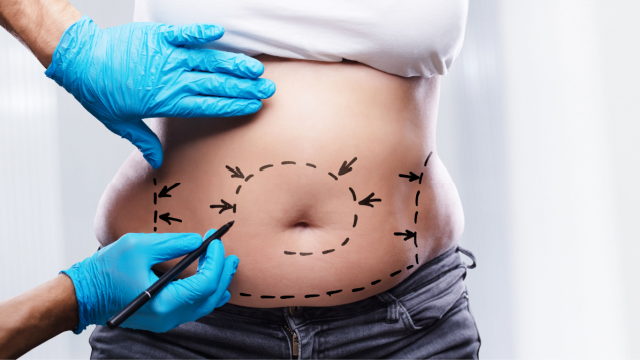
Why Korea Body Contouring Prices Stay Low Despite Global Inflation Rise
While global inflation has driven up the cost of surgical procedures in many Western markets, Korean body contouring clinics have maintained stable pricing through efficiency and modern liposuction protocols.
Learn More

Breast Fat Grafting Costs: Korea vs Japan Price Comparison 2026
Autologous breast fat grafting uses a patient's own fat cells to enhance breast volume and shape. Compare 2026 breast fat grafting costs and SVF systems in South Korea vs Japan.
Learn More

Body Lift Efficacy: 90% Satisfaction in Korean Reconstruction Studies
The human body undergoes profound structural modifications following significant weight loss, childbirth, or natural structural aging. Learn how high-precision body lift surgery in Korea achieves 90% patient satisfaction.
Learn More