Personalized Plastic Surgery & Aesthetic Care in Seocho-gu, Seoul


Medical Guide
Online vs In-Person Consultation: Korean Plastic Surgery
An online consultation can establish goals, history and obvious non-candidacy. Skin recoil, tissue thickness and eyelid measurements need hands. The line.
Schedule a ConsultationOnline vs In-Person Consultation for Korean Plastic Surgery: What Each Format Can Actually Determine
Medically reviewed by Dr. In-Ho Khang, MD, Yonsei University College of Medicine; Chief Academic Director of Plastic Surgery, Korean Society of Aesthetic Surgery & Laser (KSASL)
An online consultation for Korean plastic surgery does real work, and it has a hard edge. Some findings can be established from photographs and a written exchange. Others cannot be established until a surgeon puts hands on tissue and measures it against a fixed landmark. This article is organized around that distinction rather than around booking steps, because knowing which category your question falls into tells you how much weight to put on the answer.
A Consultation Is a Diagnostic Event
Two kinds of evidence go into a surgical opinion. The first is what you can say: goals, medical history, medications, previous procedures. The second is what your body can be made to reveal: how skin behaves when pinched and released, how thick and mobile a fat layer is, whether a mass under a nipple is firm or soft, how many millimeters an eyelid travels when you look up.
A remote exchange transmits the first kind almost perfectly and the second kind poorly or not at all. Everything below follows from that asymmetry.
What a Remote Exchange Genuinely Establishes
Four things, and none of them is trivial.
Your goals and history. Here a remote exchange loses nothing. A written account of what you want changed, what surgery you have had and what you take daily travels intact — arguably better than spoken history, because you can look up your own doses and dates instead of guessing in a chair.
Obvious non-candidacy. Some people are clearly not candidates for the operation they are asking about, and that can often be recognized without touching anyone. A survey of 177 American Society of Plastic Surgeons members, published in Plastic and Reconstructive Surgery Global Open, found that 87.1% of telemedicine users applied it to initial screening, and described remote visits as suited to screening out poor surgical candidates and identifying patients needing a standard in-person consultation. Screening out is a different act from ruling in.
Medications and conditions that need attention first. Anticoagulants, supplements affecting bleeding, diabetes, cardiac history, prior anesthesia reactions, smoking, keloid tendency. Raised weeks ahead, these can be managed rather than discovered.
Expectations about recovery and time in Seoul. How long an operation typically keeps someone in the city, and what follow-up looks like from another continent.
A useful list — and one containing no diagnosis.
What Only Hands Can Determine: Tissue Properties
Skin elasticity and recoil
Skin quality is a mechanical property. MedlinePlus describes skin turgor as the skin's elasticity — its ability to change shape and then return to normal — and notes that skin with normal turgor snaps rapidly back into position. The test is what it sounds like: pinch, release, watch. Clinicians grade it formally. StatPearls' chapter on lower eyelid laxity examination describes the snapback test, in which the middle of the lower lid is pulled outward and released; a normal lid springs immediately back against the globe, and slower returns are graded, with one grade taking more than five seconds and requiring a blink to reseat. That is a stopwatch finding, and no image captures it.
StatPearls' liposuction chapter describes an ideal candidate as nonobese with minimal skin laxity, and records contour deformities as the most frequent complication. Skin that does not retract after fat is removed produces a different result from skin that does, using identical technique.
Tissue thickness, mobility and consistency
Fat is not one substance. The same chapter distinguishes fibrous fatty tissue, less amenable to liposuction and typically sitting in the superficial layers, from areolar fat, found deeper and described as highly responsive. Which one you have changes what is achievable, and it is established by feeling the layer roll between fingers. StatPearls' abdominoplasty chapter is blunt about method: a pinch test should be performed to assess skin laxity and guide how much tissue is planned for removal. Old scars belong here too — whether one is flat and pale or raised, firm and tethered is palpated, and it shapes where a new incision can go.
Chest and breast tissue: a palpation finding, not a visual one
Gynecomastia is the clearest case here. StatPearls describes it as enlargement of glandular breast tissue and adipose tissue, and describes pseudogynecomastia — only circumferential fat beneath the areola — as a condition that has to be differentiated from it. Those two can look similar in a shirtless photograph and behave completely differently in an operation.
The distinction is made by hand. Endotext's gynecomastia chapter describes the examination as best performed with the patient lying down and the examiner palpating from the periphery inward toward the areola, with the glandular mass measured in diameter when firmness is found, and describes clinical diagnosis as finding breast tissue beneath the areola measuring two centimeters or more across. StatPearls' breast examination chapter records that overall consistency is documented as soft, firm or nodular, and that the same principles apply to the male breast. StatPearls also notes that because of fibrosis in long-standing cases, liposuction may not always work and an open procedure may be required.
What Only Measurement Can Determine: Landmarks and Millimeters
Eyelid assessment is the sharpest illustration, because the whole vocabulary is numeric.
StatPearls' blepharoptosis chapter defines margin reflex distance 1, or MRD1, as the distance from the corneal light reflex to the upper eyelid margin, normally 4 to 5 millimeters. Severity is graded by shortfall: roughly 2 millimeters of deficit is mild, 3 millimeters moderate, 4 millimeters severe. Levator function — how far the upper lid travels between full downgaze and full upgaze with the brow held still — is measured separately, with normal excursion exceeding 15 millimeters and function graded from poor at under 4 millimeters through to excellent above 12.
That grading is not academic. The same chapter records that patients with poor levator function typically require a frontalis sling rather than a levator-based repair. Two operations, selected by a number obtained with a ruler held against a face.
Then there is the question of whether the lid is the problem at all. Pseudoptosis is a lid that looks droopy for a reason other than the lid. The chapter describes cover testing to rule out hypotropia or pseudoptosis, and exophthalmometry to identify a globe sitting forward or back in the socket — tests that require occluding one eye, watching the other move, and measuring globe position against the orbital rim.
Abdominal assessment follows the same logic. StatPearls describes diastasis recti as an increased distance between the rectus abdominis muscles at the midline, with most authorities considering separation of more than two centimeters abnormal, and states that a patient's anatomy can be evaluated with a simple physical examination. It also notes that diastasis repair is sometimes combined with abdominoplasty where both separation and laxity are present. Whether your abdominal profile is fat, muscle separation or both is a fingertip finding that decides whether the operation includes a repair of the abdominal wall.
Asymmetry belongs here too. Photographs flatten a three-dimensional object onto a plane and offer no fixed reference. Real asymmetry is documented by measuring paired distances from stable bony landmarks; apparent asymmetry in a photograph is frequently just head rotation.
Why Photographs Mislead: Six Concrete Mechanisms
Patients assume a bad photograph is a blurry one. The failure modes are more specific.
Focal length and camera distance. Research published in Ecological Psychology reports that a subject's face appears rounder with a short focal length and flatter with a long one, and that faces appear narrower when photographed with short lenses and wider with long lenses.
Selfie distance specifically. A study in JAMA Facial Plastic Surgery modeled nasal appearance and reported that a selfie at roughly 12 inches increases apparent nasal size by about 30% in men and 29% in women compared with a distortion-free projection, while an image at 5 feet produces essentially no difference. A 2024 Laryngoscope study measured this across six distances and seven focal lengths and found a 12% to 19% increase in vertical stretching of the midface at 8 inches with short focal lengths. Roughly a third of your nose can be an artifact of arm length.
Lighting direction. Light raking across a surface from the side puts shadow in every depression and highlight on every ridge; flat frontal light erases the same contours. A jawline, a nasolabial fold, a tear trough or a scar can each be made to appear or disappear by moving one lamp.
Posture, head tilt and rotation. A few degrees of chin elevation changes an apparent jawline, and a slight rotation shortens one side of the face relative to the other, manufacturing asymmetry that is not there.
Mirror-image reversal. Many phone front cameras save a mirrored image by default, so your left becomes the image's right. When you and a surgeon are discussing which side is heavier or lower, a silently flipped file causes real confusion.
Compression and the absence of scale. Images sent through messaging services are recompressed, which smooths fine texture — exactly the detail that matters for pore quality or early scarring. And unless a ruler sits in the frame on the subject's plane, nothing in a photograph has a known size.
The Standards Real Clinical Photography Meets
This discipline exists because casual photographs are not comparable to each other.
A review in Aesthetic Surgery Journal Open Forum describes the requirements for aesthetic surgery photography: a gridded viewing screen and high resolution, a tripod with a leveling base, dual-source studio lighting at 45 degrees in front of the patient, a standardized matte background, consistent patient orientation, and light temperature ideally in the 5000 to 5500 Kelvin range. It warns that front-facing cameras introduce distortion, especially in nasal length. A guide to oculoplastic photography in Cureus adds that pose, focal length, aperture, lighting and white balance must all remain constant from shot to shot, and that lens focal length must be at least twice the sensor's diagonal dimension to achieve normal perspective.
Your phone, at arm's length, under whatever light is in the room, meets none of this — which is the reason a remote impression is preliminary.
What the Professional Guidance Actually Says
The literature and the societies converge on a position that is neither dismissal nor endorsement.
In the ASPS member survey, surgeons agreed that they could establish rapport remotely and that the goals of the encounter were met. The single statement they disagreed with was whether they could perform a sufficient physical examination, which scored lowest of any item measured.
The American Medical Association's Code of Medical Ethics, in its opinion on ethical practice in telemedicine, holds that physicians must uphold the standards of professionalism expected in person, recognize the limitations of the technology, confirm that the format is appropriate for the individual patient's situation, and ensure they have the information needed to make well-grounded clinical recommendations when they cannot personally conduct a physical examination.
The American Academy of Dermatology's teledermatology standards make a parallel point about the relationship itself. The Academy recommends establishing a relationship with each patient before offering direct-to-patient virtual care, and says that where an in-person visit with a new patient is not possible first, live-interactive communication should be used instead. It also recommends that virtual platforms always offer the option to be seen in person. That is professional guidance rather than a standard of care, but the direction is clear: a remote exchange with someone never examined opens a clinical relationship rather than completing an assessment.
The Korean Regulatory Frame, and What It Means for You
This part explains why the vocabulary matters.
Under Article 34 of Korea's Medical Service Act, telemedicine is framed as a service provided by medical personnel — physicians, dentists and Korean traditional medical doctors — to furnish medical knowledge or technology to medical personnel in a remote location. It is written around doctor-to-doctor support. A 2022 paper in Encephalitis states the consequence plainly: under Article 34, telemedicine is permitted in the form of teleconsults only between medical personnel.
Doctor-to-patient remote care in Korea has moved through temporary and pilot arrangements rather than through that article. A review in the Journal of Korean Medical Science records that telemedicine was temporarily permitted during the COVID-19 pandemic, and that on June 1, 2023 the Ministry of Health and Welfare launched a telemedicine pilot project, institutionalizing it to a limited extent. Eligibility under that pilot has consistently been anchored to prior in-person care at the same institution. The same review gives the clinical rationale: auscultation, percussion and palpation cannot be performed on first-time patients remotely, which complicates accurate diagnosis. The framework continues to be amended, so treat the detail as a moving target and the principle as stable.
The practical translation does not depend on which version of the rules is current. An "online consultation" offered by a Korean clinic to someone who has never been examined there is a preliminary inquiry and information exchange. It is not a medical diagnosis and not a finalized surgical plan. That is why the in-person consultation governs, and why you should be skeptical of any remote exchange that hands you a firm operative commitment from images alone.
What YONSEI LEEDS CLINIC States About Its Two Formats
The clinic's published positions here are short, and worth reading exactly as written.
It states that online consultations are available for convenience, and routes them through its online inquiry channel rather than a named platform. It records the in-person consultation as paid. It states that English-speaking consultations are available, that it provides English-speaking support for international patients, and that translated documents are available.
On the consultation itself, the clinic states that it provides thorough, unhurried consultations, listens before recommending treatment, gives transparent plans covering risks, recovery and realistic outcomes, and individualizes rather than standardizes. It states that Dr. In-Ho Khang personally oversees every treatment, and lists his clinical scope as liposuction, fat grafting, abdominoplasty, gynecomastia correction, upper and lower blepharoplasty, eye reshaping, facelift and thread lifting — several of them exactly the procedures whose planning depends on the palpation and measurement findings above.
His doctor profile page is the clinic's published record of his education and professional roles.
Scheduling a Live Exchange Across a 13-to-17-Hour Gap
The clinic publishes hours of Monday through Friday, 10:30 in the morning to 8:00 in the evening, and Saturday 10:00 in the morning to 4:00 in the afternoon, Korea Standard Time, closed Sundays and Korean public holidays.
Seoul runs 13 to 17 hours ahead of the continental United States depending on your zone and the season. The clinic's opening hour, 10:30 in the morning in Seoul, is the previous evening where you are; its closing hour, 8:00 in the evening, is early that same morning on the US side. A live exchange therefore lands either late at night or before breakfast at home, and the gap widens the further west you are. Seoul's Saturday afternoon is your Friday evening.
What the Clinic Does Not Publish, and What to Ask
Each gap below converts into a question. The clinic's documentation does not publish any of it, so do not assume it.
- How the online consultation is conducted. No platform, video service or messaging application is named; the process field points to the contact page rather than to a described sequence.
- Response times. No turnaround figure is published for an inquiry or a doctor's review. Ask what to expect, and in which time zone it is quoted.
- What photographs are required. No image list, distances, angles or lighting instructions are published. Ask what to send, and to what standard.
- Who conducts the online consultation. The clinic states Dr. Khang personally oversees treatments; it does not state that the online consultation is with him rather than staff.
- Payment and deposit terms. The payment options field is marked as needing confirmation, and the in-person consultation is described as paid with no billing mechanics published.
- Coordinator identity and hours. No named international coordinator or availability window is published, despite English support being stated.
- Capacity and wait times. No consultation wait or surgery lead time is published. Ask before booking travel.
- Travel logistics. Flights, visa requirements and accommodation are not addressed. Plan those independently.
The CDC's medical tourism guidance pairs well with that list: discuss your plan with your own physician at home well in advance, agree with both clinicians on how complications would be handled, request copies of overseas records in English, and confirm where follow-up care will occur.
Credentials: Also a Question of What Can Be Verified Remotely
The same can-or-cannot logic applies to checking the surgeon.
The clinic describes Dr. Khang as a board-certified specialist without naming the issuing board. Treat that as the clinic's own statement rather than as independently confirmed, because Korea has no public, patient-facing registry of individual specialist certification that a reader in the United States can search from home. The remedy is not a better search; it is asking which body issued the qualification and asking to see the certificate in the room.
The clinic also holds a Korean registration as a Medical Institution for Attracting Foreign Patients, issued by the Ministry of Health and Welfare — a registration permitting the treatment of foreign patients, not a quality accreditation and not a US-recognized credential. The ASPS briefing paper on cosmetic surgery tourism notes that assessing the credentials of surgeons outside the United States can be difficult.
The Bottom Line
- A remote exchange transmits history, goals, medications and expectations essentially intact, and can reasonably screen out obvious non-candidates — but screening out is not the same act as ruling in.
- Skin recoil, fat layer character, glandular versus fatty chest tissue, scar adherence, muscle separation and eyelid measurements such as MRD1 and levator function are obtained by touching and measuring. None exists in a photograph.
- Photographs mislead through specific mechanisms: focal length and camera distance, lighting direction, posture and rotation, mirror reversal, compression, and the absence of any scale reference.
- Korean law frames telemedicine around doctor-to-doctor consultation, with doctor-to-patient care handled through pilot arrangements anchored to prior in-person examination — so treat an online consultation as a preliminary inquiry, not a diagnosis or a finalized plan.
- YONSEI LEEDS CLINIC states online consultations are available through its contact page and that the in-person consultation is paid; it does not publish the platform, response times, photograph requirements, who conducts it, or payment terms.
Frequently Asked Questions
Is an online consultation enough to decide on surgery?
No, and no serious clinic should present it that way. A remote exchange can establish your goals and history, flag medications, and identify people who are clearly not candidates. It cannot establish skin elasticity, tissue consistency, muscle separation or eyelid measurements, all of which decide which operation is appropriate.
What can a surgeon tell from my photographs?
Broad shape, general proportion, obvious asymmetry and the visible surface of skin — with real caveats. Published research shows a photograph taken at roughly 12 inches can increase apparent nasal size by about 30%, and that short focal lengths at short distances measurably stretch midfacial features. Photographs start a conversation; they are not a measurement.
How should I take photographs to send to a clinic?
Ask the clinic first, since requirements differ and this clinic does not publish a list. In general, distance and consistency matter more than resolution: stand well back rather than holding the camera at arm's length, use even frontal light, keep your head level and posture consistent between shots, turn off mirroring, and send original files rather than screenshots.
Does Korean law allow a doctor to consult me online before I travel?
Article 34 of Korea's Medical Service Act frames telemedicine as support between medical personnel, and doctor-to-patient remote care has run through temporary pandemic measures and a later government pilot project whose eligibility is tied to prior in-person care. In practice, an online consultation offered to a first-time overseas patient is an information exchange, not a diagnosis.
Why can't skin quality be judged from a photograph?
Because it is a mechanical property, not a visual one. Skin elasticity is assessed by pinching and releasing tissue and watching how quickly it returns — clinicians even grade eyelid recoil by how many seconds the snapback takes. Two people with visually identical skin can retract very differently after fat removal.
What should I ask before booking a flight to Seoul?
Ask who conducts the online consultation, what format it uses, what response time to expect, what images are wanted, how the paid in-person consultation is arranged, who your named English-language contact is, and what happens if the in-person assessment changes the plan. Get the answers in writing.
Can the in-person consultation change what I was told online?
Yes, and you should expect that it might. Remote impressions are formed without palpation or measurement, so an examination can reveal that a different technique is indicated, that a combination is needed, or that the procedure discussed is not appropriate. Plan your trip so a changed recommendation is manageable.
This article is for general informational purposes and does not constitute individualized medical advice, and it is not a self-diagnosis tool. Surgical candidacy, technique, and expected outcomes can only be determined through a consultation with a qualified plastic surgeon.
More Articles
Continue reading our clinical guides.
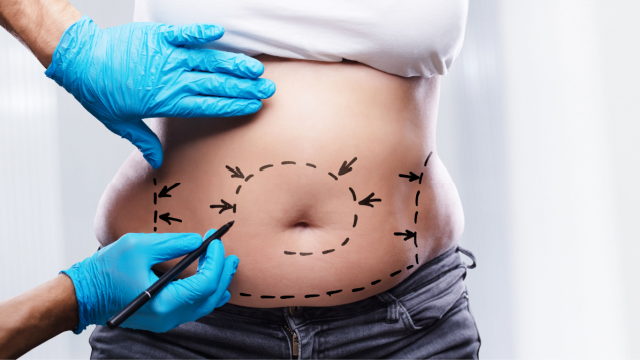
Why Korea Body Contouring Prices Stay Low Despite Global Inflation Rise
While global inflation has driven up the cost of surgical procedures in many Western markets, Korean body contouring clinics have maintained stable pricing through efficiency and modern liposuction protocols.
Learn More
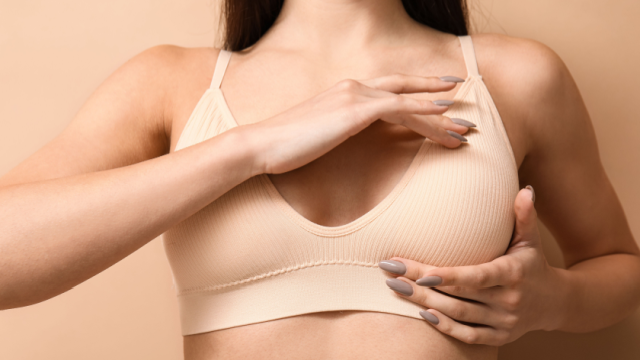
Breast Fat Grafting Costs: Korea vs Japan Price Comparison 2026
Autologous breast fat grafting uses a patient's own fat cells to enhance breast volume and shape. Compare 2026 breast fat grafting costs and SVF systems in South Korea vs Japan.
Learn More
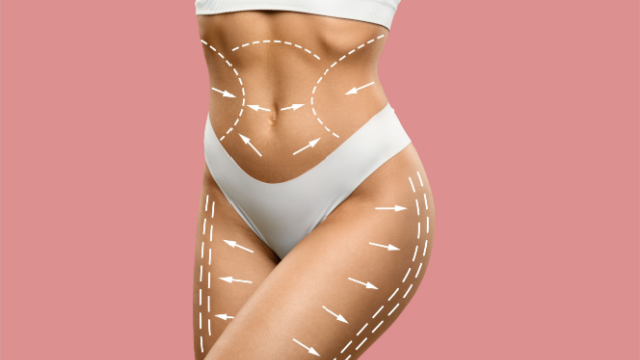
Body Lift Efficacy: 90% Satisfaction in Korean Reconstruction Studies
The human body undergoes profound structural modifications following significant weight loss, childbirth, or natural structural aging. Learn how high-precision body lift surgery in Korea achieves 90% patient satisfaction.
Learn More