Personalized Plastic Surgery & Aesthetic Care in Seocho-gu, Seoul

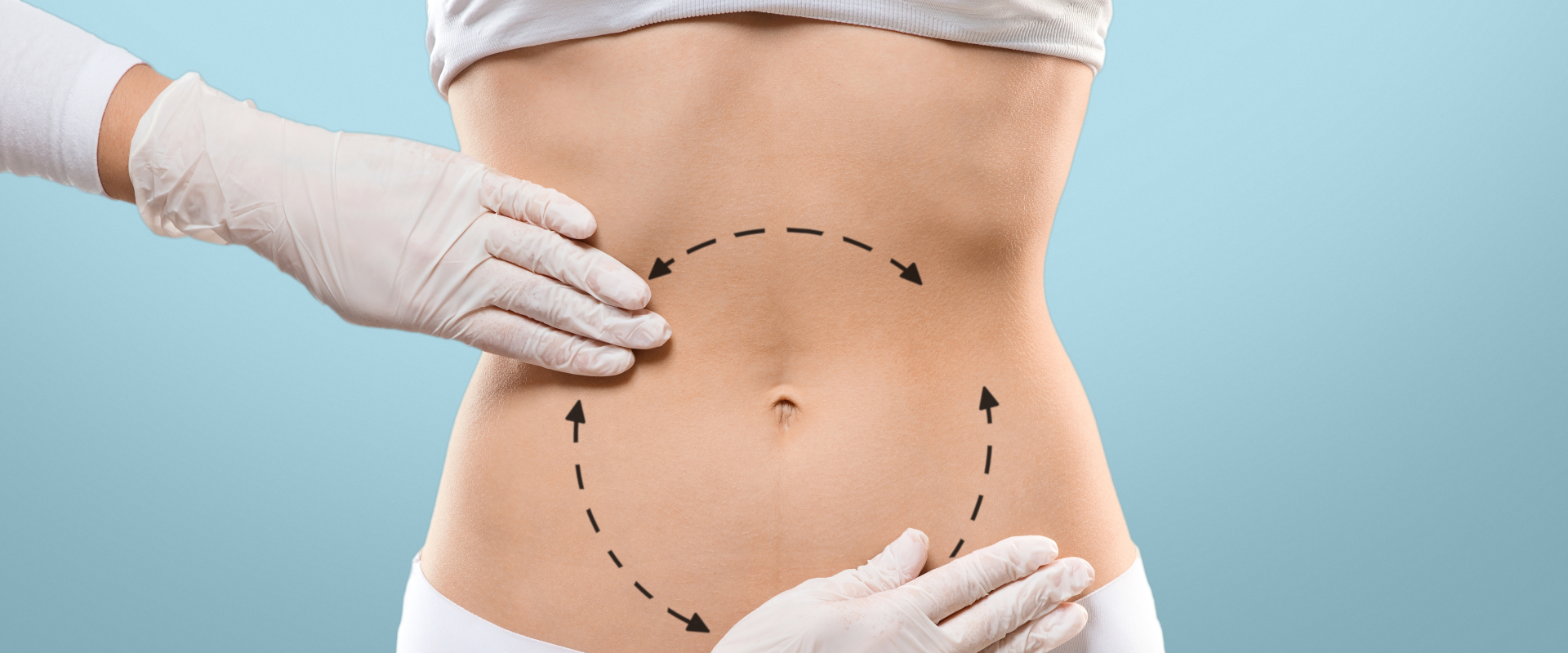
Medical Guide
Liposuction vs Body Lift After Weight Loss: How to Choose
Liposuction vs body lift after weight loss comes down to one question: is the problem leftover fat or loose skin? Here is how surgeons tell them apart.
Schedule a ConsultationLiposuction vs Body Lift After Significant Weight Loss: How to Choose
Medically reviewed by Dr. In-Ho Khang, MD, Yonsei University College of Medicine; Chief Academic Director of Plastic Surgery, Korean Society of Aesthetic Surgery & Laser (KSASL)
The choice between liposuction vs body lift after weight loss comes down to one question: is what bothers you made of fat, or made of skin? Liposuction removes fat volume from under the skin. A body lift removes the skin itself and repositions the tissue underneath. Choosing the fat operation for a skin problem is one of the most common reasons people are disappointed with body contouring, so this article walks through how surgeons make that distinction and what each path involves.
The Short Answer: Volume Versus Envelope
Think of your body after significant weight loss as having two separate issues that happen to overlap.
The first is volume: pockets of fat that remain in particular places even at a stable, healthy weight. Flanks, outer thighs, the upper abdomen and the area under the chin are common. Liposuction is designed for this.
The second is envelope: the skin that stretched to cover a larger body and did not shrink back. It hangs, folds, chafes, and does not respond to training. No amount of fat removal fixes it — in fact, removing the fat underneath a lax envelope can leave the skin looking emptier. Excisional surgery, meaning a body lift or a related procedure, is designed for this.
Most people who have lost a great deal of weight have some of both, in different proportions in different regions. That is why plans after major weight loss are usually a combination rather than one operation, and why the answer to "which one do I need" is often "different ones in different places."
YONSEI LEEDS CLINIC frames it the same way in its published materials. It describes liposuction as targeted removal of localized fat, and body lift as the procedure for excess and sagging skin that liposuction and non-surgical treatments cannot adequately address. It states directly that a body lift is not a weight-loss procedure.
What Liposuction Does, and Where It Stops
Liposuction removes subcutaneous fat through small incisions using a cannula. The Mayo Clinic and Cleveland Clinic both describe it as a body-contouring procedure rather than a treatment for obesity or a substitute for weight loss, and note that it does not treat cellulite or loose skin.
At YONSEI LEEDS CLINIC, liposuction is offered by area — the abdomen, arms, thighs, calves, knees, flanks and love handles — and the clinic describes planning it around fat distribution, skin elasticity, overall body proportions and aesthetic goals. It describes using EVA-assisted liposuction with a system it calls AIRS, which it says separates and removes fat while aiming to reduce trauma to surrounding blood vessels, nerves and soft tissue, and which it says includes an automatic pressure-sensing feature that halts operation when excessive pressure is detected. It also describes a technology it calls ADDIT, intended to reduce the risk of burn-like scarring from friction heat, with matching aftercare for post-operative pigmentation or redness. These are the clinic's descriptions of its method.
The clinic states that liposuction permanently removes fat cells from the treated area and that those cells do not regenerate, while noting that maintaining a stable weight is what preserves the result over time. It gives an approximate treatment time of one to two hours per area, under local or sedation anesthesia depending on scope.
Where liposuction stops is the part worth memorizing. It does not remove skin. It does not tighten a lax skin envelope. Classic surgical writing on patient selection for liposuction makes skin tone a central criterion for exactly this reason: suction reduces volume and leaves the surgeon dependent on the skin's own ability to retract. In a patient with good elasticity, that retraction is often enough. In a patient whose skin was stretched by a hundred pounds and has been loose for years, it usually is not.
What a Body Lift Does
A body lift is an excisional operation. Rather than suctioning fat out, the surgeon removes a defined segment of loose skin and underlying tissue, then closes and redrapes what remains. Depending on the pattern used, it can address the abdomen, flanks, lower back, outer thighs and buttocks in a coordinated way, and an arm lift may be added when significant upper-arm sagging is present.
YONSEI LEEDS CLINIC describes exactly this scope and lists the improvements it expects: removal of excess sagging skin, a flatter and smoother lower-abdominal profile, reduced functional discomfort from abdominal skin folds, improved waist definition and torso proportion, improved position and firmness of the buttocks, reduced loose skin around the upper thighs, and improvement in severe upper-arm sagging when an arm lift is performed.
The clinic describes an individualized surgical design based on anatomy, skin elasticity, fat distribution and degree of sagging, scar-minimizing suturing techniques used across its body-contouring procedures, and a minimally invasive arm-lift approach intended to limit disruption of blood vessels and nerves. For recovery it describes an initial monitoring period of roughly one to two hours followed by same-day discharge, outpatient follow-up at approximately one to two weeks, stitch removal across two or three visits, and light daily activity resuming for most patients at around one week.
It also names the risks it discusses with patients: reactions to anesthesia, temporary swelling and bruising, changes in sensation, variation in wound healing, and the possibility of visible scarring. The wider risk set discussed in general surgical guidance for this operation is longer still, including bleeding or hematoma, infection, fluid accumulation (seroma), blood clots, poor wound healing, skin loss, asymmetry, widened scars, persistent swelling, recurrent skin looseness and the possibility of revision surgery.
Where Body Line Surgery Fits
The clinic also offers what it calls body line surgery, and it is worth understanding as a third category rather than a synonym for liposuction.
Body line surgery is contouring planned across the whole silhouette rather than one isolated area, potentially involving the abdomen, waist, hips, thighs, arms and back together. The clinic describes a three-dimensional body analysis at consultation used to assess fat distribution, skin quality, proportional balance and anatomical structure, then a surgical map that treats interconnected zones as one contour. It describes calibrated fat removal intended to preserve natural tissue layers and reduce surface irregularity, complementary fat grafting or repositioning where curvature is needed, and final contours becoming visible over three to six months.
Note the candidacy language, because it is where body line surgery separates itself from post-weight-loss work. The clinic describes suitable candidates as people close to a healthy weight with localized resistant fat or unbalanced proportions, and states that people significantly above their target weight, people with unmanaged medical conditions, and people expecting surgery to replace lifestyle change may not be appropriate candidates at that stage. If your dominant problem is hanging skin, this is not the category you are shopping in.
The Deciding Variable: Skin Quality
Surgeons assess skin quality by looking and by feel. Elasticity, thickness, the presence and depth of stretch marks, the number and depth of folds, and whether the skin snaps back or stays displaced when lifted and released all feed into the judgment. Age, sun exposure, smoking, genetics, pregnancy history and the magnitude and speed of weight loss all influence it.
Some practical patterns:
- Good elasticity, modest residual fat. Liposuction alone may produce a smooth result, because the skin retracts over the reduced volume.
- Moderate laxity with real fat volume. This is the genuinely difficult middle ground, and it is where a careful in-person assessment earns its value. Some regions may suit liposuction, others excision.
- Significant hanging skin, especially in folds. Excisional surgery is the realistic route. Liposuction here tends to deflate rather than shape.
YONSEI LEEDS CLINIC states in its own comparison that when skin elasticity is poor, a lift may be more appropriate than liposuction alone, and that some skin laxity cannot be resolved by liposuction or non-surgical treatment. That is a fair and unusually direct statement of the limits of a procedure the clinic itself sells.
Weight Stability Comes First
Every credible source on post-weight-loss contouring says the same thing in different words: operate on a body that has stopped changing.
The American Society of Plastic Surgeons advises that patients reach and hold a stable weight before body contouring, because continued loss creates new laxity and regain stretches the result you just paid for. Cleveland Clinic's guidance on surgery after significant weight loss makes the same point. The clinic's own criteria echo it, describing candidates as patients in stable health who are at or near their target weight, and describing unstable weight as a reason surgery may need to be postponed.
For patients who have had bariatric surgery, weight typically continues to change for a considerable period afterward, and contouring is generally deferred until that curve flattens. Ask your surgeon what interval they use and why.
Nutrition deserves its own line. After bariatric surgery, protein intake and micronutrient status can be compromised, and both matter for wound healing in an operation that creates long incisions. Literature on body contouring in the massive weight loss patient treats nutritional assessment as part of preoperative planning rather than an afterthought, and the American Society of Plastic Surgeons' preparation guidance covers the same ground for patients. If you take supplements after bariatric surgery, bring the list.
Smoking is the other modifiable factor. Nicotine constricts blood vessels and impairs healing in exactly the tissue flaps an excisional operation depends on. The clinic lists smoking among the factors to discuss with the surgeon before a body lift.
Candidacy, as the Clinic Publishes It
For Liposuction
The clinic describes suitable candidates as adults in good general health with realistic expectations seeking contouring rather than primary weight loss, with localized fat that has not responded adequately to diet or exercise, relatively stable weight, reasonable skin elasticity, and general health suitable for a surgical procedure. It states that patients who are pregnant, who have active infections, or who have conditions affecting wound healing or anesthesia tolerance are not appropriate candidates. It separately notes that significant blood-flow problems, coronary artery disease, diabetes, weakened immunity or unstable health may require further evaluation first.
For Body Lift
The clinic's published candidate description is specific to this article's readership. It names post-weight-loss patients with significant excess or hanging skin, patients with severe skin laxity that liposuction cannot adequately improve, patients with severe arm sagging or upper-arm fat combined with laxity, people with disproportionate contours from uneven fat distribution and loose skin, adults whose skin elasticity has declined through aging, genetics, pregnancy or significant weight fluctuation, and patients in stable health at or near their target weight. It states that final suitability requires a consultation with Dr. In-Ho Khang, whose published background appears on the clinic's doctor profile page.
For reasons to postpone, it names medical conditions that could increase surgical or healing risk, unstable weight, active infection, and other factors identified during medical evaluation.
Staging: Why One Operation Is Rarely the Whole Plan
Patients who have lost a large amount of weight often want everything addressed at once. Surgeons generally resist that, and the reason is straightforward: operative time, blood loss, fluid shifts and total wound surface all accumulate, and complication risk rises with them.
The literature on body contouring after bariatric weight loss and on the safety of staged body contouring describes sequencing procedures across separate operations as a standard risk-management approach, with the order chosen by what bothers the patient most, what is anatomically related, and what recovery allows. The American Society of Plastic Surgeons describes post-weight-loss contouring as commonly involving more than one procedure over time.
YONSEI LEEDS CLINIC describes combination treatment as planned individually rather than offered as a package, gives body lift with breast fat grafting as one example of a combined plan, and notes that combining procedures increases surgical complexity and risk. For liposuction across several regions, it describes full-body treatment as carefully staged and individualized to support surgical safety and a manageable recovery.
If you are traveling from the United States, staging has a scheduling consequence: a complete plan may mean more than one trip, or a longer single stay. Establish that expectation before you book anything.
Safety Considerations That Matter More After Major Weight Loss
Blood Clots
Venous thromboembolism — clots in the deep veins that can travel to the lungs — is among the most serious risks in body contouring, and post-weight-loss patients carry several risk factors at once: longer operations, larger surface areas, higher body mass index in many cases, and reduced mobility afterward. Published analysis of thromboembolism risk after body contouring surgery documents this, and guidance on venous thromboembolism prophylaxis in plastic surgery treats formal risk assessment as routine.
Long-haul travel adds to it. The CDC's traveler health guidance on deep vein thrombosis and pulmonary embolism notes that prolonged immobility during travel raises risk, and that recent surgery is itself a risk factor. Combining a long flight with recent major surgery is precisely the situation to plan carefully rather than improvise.
Wound Healing, Seroma and Scars
Long incisions under tension heal less predictably than short ones. Fluid collections beneath the skin flap, delayed healing at points of maximum tension, and wound separation are recognized complications of excisional body contouring, and Cleveland Clinic's materials on excess skin removal and panniculectomy describe them for patients. Drains, compression garments and activity restriction all exist to manage this phase.
General surgical guidance for this operation names fluid accumulation, poor wound healing, skin loss, widened scars and the possibility of revision surgery, and the clinic and it states that scar appearance varies with individual healing biology and post-operative care.
Scars: The Trade You Are Actually Making
This is the honest center of the decision. Liposuction leaves small incisions that usually become inconspicuous. A body lift leaves long scars, positioned by the surgeon to sit where clothing normally covers them, in exchange for removing skin that suction cannot touch.
Nobody should choose an excisional operation without seeing where the scar will go, drawn on their own body. Ask for that at consultation. Ask what the scar looks like at three months versus a year, ask what happens if part of it widens, and ask what the clinic's scar-management protocol involves. The clinic states that it uses scar-minimizing suturing techniques across body-contouring procedures, and separately describes laser-based scar management within its aftercare programs.
For many post-weight-loss patients the trade is clearly worth it, particularly where skin folds cause rashes, irritation or restricted movement. For others it is not. That judgment is yours, and it should be made with accurate information rather than optimism.
Recovery and the Practicalities of a Trip to Seoul
Recovery timelines differ substantially between the two operations. Cleveland Clinic notes that body-contouring recovery can take several weeks to months, with many patients needing roughly four to six weeks before returning to normal activities. The clinic describes light daily activity resuming for most body-lift patients at around one week, with a gradual return to routine, and describes liposuction recovery as involving swelling, bruising and soreness with contour improvements appearing as swelling resolves over weeks and refining over months.
Final results take longer than most people expect. The American Society of Plastic Surgeons notes that final body-lift results can take a prolonged period to fully develop, in some cases beyond a year. The clinic describes final body-line contours becoming visible over three to six months.
Three practical points for an international patient:
- Stay length is individual. The clinic states that body lift is major surgery, that international patients should allow enough time for the initial post-operative assessment, and that a quick return trip should not be scheduled without the surgeon's approval.
- Flying home needs clearance. Air travel soon after major surgery raises clot concerns, and the appropriate interval differs by procedure. Aviation medical guidance on fitness to fly after surgery sets out how those intervals are reasoned about; your operating surgeon gives you the actual date.
- Follow-up should be arranged in advance. The CDC's medical tourism guidance emphasizes planning aftercare and complication management before you travel. The clinic states it provides written treatment documentation and remote follow-up after patients return home, and that English-speaking support is available. Its inquiry route is the online consultation and contact page.
What Determines the Scope of Your Plan
Without quoting figures, the drivers are consistent across clinics: how many regions are being treated, whether the work is suction-based or excisional, whether more than one operation is needed, total operative time, the type of anesthesia and monitoring required, the length of stay and number of follow-up visits, and whether garments, drains or scar-management treatments are included. Ask for a written scope covering all of those before you commit. A plan you can read line by line is easier to compare than a single number.
The Bottom Line
- Liposuction removes fat; a body lift removes skin. After significant weight loss, the deciding question is whether your concern is residual fat volume or a stretched skin envelope, and many patients have both in different regions.
- Skin elasticity is the pivot. YONSEI LEEDS CLINIC states that when elasticity is poor, a lift may be more appropriate than liposuction alone, and that some laxity cannot be resolved by liposuction or non-surgical treatment.
- Weight should be stable and at or near target before contouring, and nutrition and smoking status matter more here than in most cosmetic surgery because excisional wounds are long and under tension.
- Comprehensive plans are usually staged across more than one operation for safety, which has real consequences for how you schedule and budget a trip from the United States.
- A body lift trades loose skin for long scars in planned positions — see the planned scar drawn on your own body before you agree to it.
Frequently Asked Questions
I have lost weight but I am not sure my skin is that loose. How do I tell?
A surgeon assesses it by lifting the skin and watching how it settles, checking for folds that persist when you stand upright, and noting stretch mark depth and skin thickness. A rough self-check: if the tissue you can pinch feels soft and empties when lifted, it is largely skin; if it feels dense and full, there is fat volume there. Only an in-person examination settles it.
How long does my weight need to be stable before surgery?
Long enough that your weight has genuinely plateaued rather than merely slowed. Guidance from U.S. plastic surgery bodies emphasizes reaching a stable weight before contouring, and after bariatric surgery that usually means waiting until weight has flattened out for a sustained period. The clinic lists unstable weight among the reasons surgery may need to be postponed. Ask your surgeon for their specific interval.
Can liposuction and a body lift be done in the same operation?
Sometimes, and it depends on total surgical volume rather than on convenience. Liposuction is often used alongside excisional work to refine adjacent areas. But combining procedures lengthens the operation and increases complexity, and the clinic notes that combination raises surgical risk and is planned individually rather than sold as a package. Your health status and the extent of each component decide it.
What is the difference between a body lift and a tummy tuck?
A tummy tuck, or abdominoplasty, addresses the abdomen: excess skin, and often separation of the abdominal muscles. A body lift is broader, working circumferentially or across linked regions such as the abdomen, flanks, lower back, outer thighs and buttocks. After major weight loss, laxity rarely stops at the front of the abdomen, which is why the wider pattern is often discussed.
Is removing excess skin ever considered medically necessary rather than cosmetic?
It can be. Persistent skin folds can cause chronic rashes, skin infections, irritation and restricted movement, and a panniculectomy — removal of the overhanging apron of lower abdominal skin — is sometimes performed for those functional reasons. Whether any of it is covered where you live is a determination your own insurer makes, and it is separate from surgical candidacy.
How long will I need to stay in Seoul?
There is no single answer, and you should be cautious of any clinic that gives you one before examining you. YONSEI LEEDS CLINIC states that body lift is major surgery, that international patients should allow enough time for the initial post-operative assessment, and that a return trip should not be scheduled without the surgeon's approval. Get your stay length and your flight clearance date in writing.
Will the results last?
Structurally, yes, with caveats. Skin that has been surgically removed does not return, and the clinic describes body-lift results as intended to be long-lasting particularly when weight remains stable. Liposuction permanently removes fat cells from the treated area. But significant weight gain, further pregnancy, natural aging and continued loss of skin elasticity can all change the result over time.
This article is for general informational purposes and does not constitute individualized medical advice, and it is not a self-diagnosis tool. Surgical candidacy, technique, and expected outcomes can only be determined through a consultation with a qualified plastic surgeon.
More Articles
Continue reading our clinical guides.
Why Korea Body Contouring Prices Stay Low Despite Global Inflation Rise
While global inflation has driven up the cost of surgical procedures in many Western markets, Korean body contouring clinics have maintained stable pricing through efficiency and modern liposuction protocols.
Learn More

Breast Fat Grafting Costs: Korea vs Japan Price Comparison 2026
Autologous breast fat grafting uses a patient's own fat cells to enhance breast volume and shape. Compare 2026 breast fat grafting costs and SVF systems in South Korea vs Japan.
Learn More
Body Lift Efficacy: 90% Satisfaction in Korean Reconstruction Studies
The human body undergoes profound structural modifications following significant weight loss, childbirth, or natural structural aging. Learn how high-precision body lift surgery in Korea achieves 90% patient satisfaction.
Learn More