Personalized Plastic Surgery & Aesthetic Care in Seocho-gu, Seoul

Medical Guide
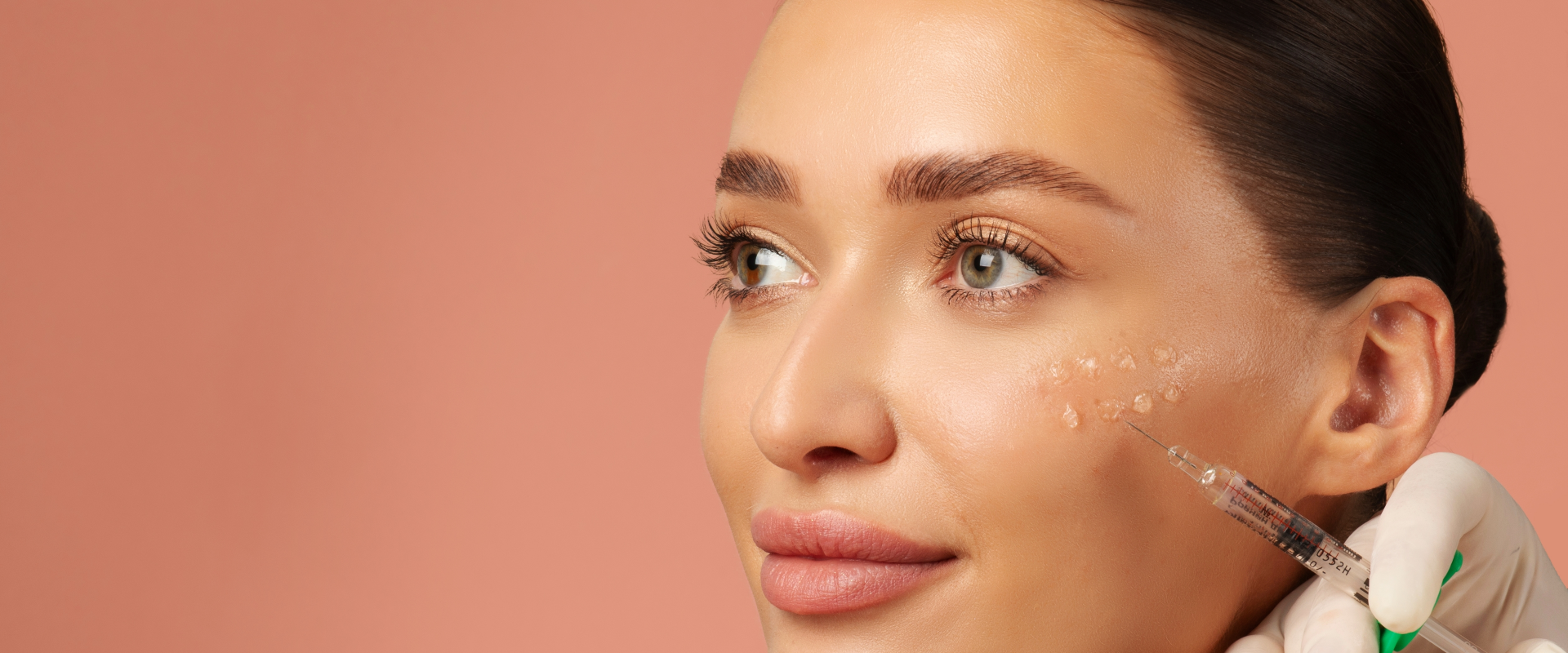
Facial Fat Grafting vs Dermal Fillers: How to Choose
Fat grafting vs fillers for the face: a decision framework covering retention, recovery, risks and candidacy, plus what a Seoul clinic states it offers.
Schedule a ConsultationFacial Fat Grafting or Dermal Fillers: Choosing a Volume Restoration Method
Medically reviewed by Dr. In-Ho Khang, MD, Yonsei University College of Medicine; Chief Academic Director of Plastic Surgery, Korean Society of Aesthetic Surgery & Laser (KSASL)
If you are weighing fat grafting vs fillers for the face, the first thing to know is that these are not two versions of one treatment. One is an operation that moves your own tissue and produces a result no surgeon can predict precisely. The other is a manufactured gel, visible the same day and gone within months. YONSEI LEEDS CLINIC in Seoul offers both, and this article sets out the decision framework: candidacy, longevity, recovery, risk, and the limits of each.
Two Procedures, Two Categories of Medicine
A dermal filler, in the U.S. Food and Drug Administration's description, is a gel-like substance injected under the skin to create a smoother or fuller appearance. The agency regulates fillers as medical devices. Some fillers are naturally absorbed over time, the FDA states, so patients may need to repeat the procedure to maintain the effect. Hyaluronic acid, a sugar found naturally in the body, is the most common material.
Autologous fat grafting is a different animal. Autologous means the tissue comes from you. Clinical references describe three stages: fat is harvested from a donor area by liposuction, processed to separate usable fat from oil, blood and fluid, then injected into the recipient area in small increments. StatPearls, on the National Library of Medicine's Bookshelf, lists the abdomen, buttocks and thighs as usual donor sites, and notes many of these procedures are performed under general anesthesia.
That difference in category matters. A filler has a manufacturer, a label, approved indications and a batch number. Your own fat has none of those, so the safety of grafting rests on the surgeon, the technique and the facility rather than on any device clearance.
The Regulatory Line, and What It Means From the United States
The FDA states that dermal fillers are approved for specific uses in adults 22 and older: augmentation of the lips, cheeks, chin and back of the hand; moderate-to-severe facial wrinkles and skin folds such as nasolabial folds and perioral lines; and restoration of facial fat loss in people with HIV. Non-absorbable, permanent fillers are approved only for nasolabial folds and cheek acne scars. That list is the boundary of what has been evaluated. The agency is equally explicit about what sits outside it. It recommends against dermal fillers or any injectable filler for body contouring and enhancement — to increase breast size, increase the size of the buttocks, increase fullness of the feet, or implant into bone, tendon, ligament or muscle — and against injecting the glabella, the nose, the periorbital area around the eyes, the forehead or the neck. Injectable silicone is not approved for any aesthetic procedure, and the FDA attributes to silicone injections long-term pain, infections, scarring, permanent disfigurement, embolism, stroke and death. Needle-free injection devices are not approved either.
Two points follow if you are considering autologous fat grafting in Seoul, facial fat transfer Korea clinics offer, or filler treatment abroad. Device authorization is granted country by country: a filler legally sold in Korea has not by that fact been authorized for cosmetic use in the United States, and nothing here asserts that any named brand is FDA-approved. The agency publishes its own list of approved fillers. Second, ask for the exact product name in writing; the clinic states written treatment documentation is provided to international patients, and that record lets a physician at home act sensibly later.
Longevity: The Number Nobody Can Promise You
For hyaluronic acid fillers, the range is reasonably well characterized. StatPearls describes the effects as lasting up to roughly four to six months depending on the site, product and injection technique, states plainly that the treatment is not permanent, and cites durations as short as eight to sixteen weeks for dermal use. As the gel breaks down, water gradually takes its place, so volume fades rather than vanishing overnight.
For fat, the honest answer is a spread of published estimates that do not agree. A systematic review and meta-analysis in Aesthetic Plastic Surgery pooled 27 studies covering 1,011 facial fat grafting patients followed for three to twenty-four months. Reported volume retention varied from 26 to 83 percent, and the pooled estimate was 47 percent. The authors concluded that the proportion of a facial fat graft retained is currently unpredictable, and that the measurement method significantly influenced the reported figure. A review of complications in Plastic and Aesthetic Research cites a separate meta-analysis of twelve studies finding 50 to 60 percent of grafted volume present at one year, with reported ranges from 20 to 80 percent. StatPearls says resorption of up to 80 percent is anticipated and that the evidence regarding definitive survival rates is conflicting.
Three conclusions hold across that spread. A meaningful proportion of transferred fat resorbs. The portion that establishes a blood supply can be long-lasting, which is not the same as permanent, and no graft should be described in those terms. And a second session is sometimes needed, which is why StatPearls advises discussing a possible future revision during consent. StatPearls also lists planned weight loss or ongoing weight gain as reasons grafting may be inadvisable, since graft volume is not stable when body fat is not.
The Appointment, and the Days That Follow
A filler session is office-based. The clinic states that a topical numbing agent may be applied where appropriate, that results are immediate and continue settling over roughly one to two weeks, and that most patients resume daily activities the same day, avoiding strenuous exercise, heat and alcohol for the first twenty-four hours.
Fat grafting is surgery in two places at once, so facial fat grafting recovery involves the donor site and the face together. StatPearls describes a compression garment for two to three days, avoiding vigorous activity for two to three weeks, cool compresses in the first three days but not aggressive icing because of the risk to the graft, and not massaging the grafted area early, since pressure can shift transferred fat. The ASPS article quotes a surgeon recommending that direct pressure on injected areas be avoided for at least six weeks, and notes several months pass before the lasting volume is apparent. Prolonged facial swelling is expected; StatPearls says fever, warmth, spreading redness and tenderness point instead to cellulitis.
The clinic states swelling and bruising at both sites are expected in the days after treatment, and that scheduled follow-up lets the team assess fat retention and decide whether supplementary treatment is appropriate — so the second session is not hypothetical.
Planning the Trip: Downtime Versus Your Travel Window
The difference between an office injection and an operation is mostly a difference in schedule. On travel, the CDC's Yellow Book names cosmetic surgery among the categories US medical tourists pursue, though it identifies dental care as the most common form of medical tourism among US residents. Infection-related problems are the most common complications it reports among medical tourists. Its advice applies anywhere: discuss the plan with your own physician beforehand, check what your insurance covers abroad, and settle who manages a complication. It advises against flying for ten days after chest or abdominal surgery because of atmospheric pressure changes, and cites the American Society of Plastic Surgeons' recommended seven-to-ten-day wait after cosmetic procedures to the face, eyelids or nose.
Clot risk is separate. The CDC's chapter on deep vein thrombosis lists recent surgery among the risk factors for venous thromboembolism and states that most travel-associated events occur in the first one to two weeks after a flight. For higher-risk travelers on journeys over six hours it reports that the American College of Chest Physicians recommends frequent walking, calf muscle exercise, an aisle seat and properly fitted below-the-knee graduated compression stockings.
Two gaps are worth closing before booking. The clinic publishes no minimum length of stay for facial fat grafting; its guidance is that international patients should allow time for the procedure, early recovery and any requested review, and obtain the surgeon's approval before booking a return flight. Its anesthesia protocol for fat grafting is also unpublished, so ask what is planned and who monitors it. Seoul sits roughly 13 to 17 hours ahead of the continental United States, so plan calls around the gap; the clinic's inquiry and consultation page is the published route for arranging one.
Risks Worth Naming on Both Sides
Fat grafting
Donor-site effects are often overlooked. The Plastic and Aesthetic Research review cites a series of 416 autologous fat grafting cases with an overall complication rate of 5.5 percent, in which donor-site contour irregularity and induration were most common at 1.2 percent each. Donor-site complications were more frequent at lower body mass index — directly relevant if you are slim and hoping there is enough fat to harvest.
At the recipient site, the same review reports contour irregularity in 0.54 to 2.9 percent of cases in recent meta-analyses, infection in 0.10 to 0.54 percent, and bruising or swelling persisting beyond two weeks in 0.6 percent. It also explains the more troubling lumps: when grafted fat sits too far from a blood supply the center becomes ischemic and undergoes fat necrosis, and areas of necrosis larger than about ten millimeters can develop into oil cysts, with the surrounding inflammation capable of producing calcification. Granulomas — firm inflammatory nodules — can form in response to oil, fibrous material or blood carried into the graft. StatPearls adds over- and under-correction and deformities from injections placed too superficially.
Then there is the rare catastrophic outcome. Fat injected into the face can enter an artery. StatPearls lists blindness from occlusion of the ophthalmic artery, stroke from occlusion of the internal carotid artery, and fat embolism: high-pressure injection can drive fat backward into an artery, and when the pressure is released the fat travels onward and blocks a vessel such as the central retinal artery. A case report and literature review in Frontiers in Medicine documents two previously healthy women in their late teens who developed cerebral infarction after facial fat injection. The first presented with loss of consciousness and left-sided weakness, deteriorated despite decompressive surgery, developed central respiratory failure and died. The second had sudden vision loss in one eye and right-sided weakness, and her vision had not improved at three-month follow-up. The authors note there is no reliable treatment for reversing an ophthalmic artery embolism; the complications review singles out the glabella and the area around the eyes as demanding a blunt cannula and low-pressure injection. These events are rare, and they are why the judgment of the person holding the syringe matters more than any device name.
Dermal fillers
The FDA describes the most serious risk of dermal fillers as accidental injection into a blood vessel, which can cause skin necrosis, stroke or blindness; the chance is low, but the damage can be permanent. Its listed common risks are bruising, redness, swelling, pain, tenderness, itching and rash. Less common risks include inflammation near the injection site after a viral or bacterial illness, a vaccination or a dental procedure; nodules or granulomas that may need injections, oral antibiotics or surgical removal; infection; open or draining wounds; allergic reaction; and tissue death. Critically, the agency states that while most side effects appear shortly after injection and resolve within days to weeks, some emerge weeks, months or years later.
Removal is not a formality: the FDA notes that reducing or removing filler may require further procedures or surgery, and that some materials are difficult or impossible to remove. For hyaluronic acid, StatPearls describes the enzyme hyaluronidase as able to dissolve the gel, which is why a suspected vascular event with this material is an emergency. It lists hypersensitivity, bleeding disorders and injection into sites other than those on the label as contraindications, and notes that safety in pregnancy and breastfeeding has not been established.
Who Needs Fat Grafting Instead of Filler
The decision usually turns on four questions.
How much volume is missing, and in how many places? Filler suits a defined area. Where hollowing is diffuse — temples, midface and the areas around the eyes and mouth together — the volume required climbs, and StatPearls notes that severely hollow temples alone may take a substantial injected volume. That is where one operation begins to look more sensible than repeated office visits.
Is there donor fat, and is your weight stable? The clinic states candidates should have sufficient donor fat, be in generally good health and hold realistic expectations, and that patients without enough donor-site fat may not be appropriate. StatPearls also flags complete resorption of a previous graft, extensive burn scarring, past radiation, keloid scarring, clotting disorders and a need for immunosuppressive medication as circumstances in which grafting may be unsuitable.
How much downtime can you absorb, and how often do you want to return? An awake appointment with same-day return to activity and an operation with two healing sites, weeks of activity restriction and months before the final appearance are not comparable commitments. A resorbable filler means a repeat visit every few months; grafting front-loads the effort into one operation, with a top-up sometimes part of the plan.
What Neither Method Can Do
Volume restoration does not lift. StatPearls describes the aging face as changing in two ways — descent of soft tissue under gravity, and loss of volume from thinning skin, muscle atrophy, fat loss and reduced bone thickness — and notes that descent is traditionally addressed with lifting procedures while volume loss is addressed with filling materials. If sagging along the jawline is the dominant finding, neither fat nor filler is the primary tool.
Neither method is easily undone. Overfilled grafted fat may need steroid or deoxycholic acid injections, microliposuction or excision, according to the complications review; some fillers cannot be removed at all.
What Drives the Cost, Without Figures
This article publishes no prices. What matters is the structure of the difference.
Fat grafting is priced like surgery: an operating environment, anesthesia and monitoring, two treated sites and a longer appointment. The volume of fat required, the number of facial areas, and whether grafting is combined with another procedure all move the total. The possibility of a second session belongs in your planning, since a touch-up is a recognized part of this treatment rather than a sign something went wrong.
Filler is priced like an office procedure, and the clinic names the drivers: which product is selected, the treatment area, the amount used and how many areas are treated. The recurring nature is what patients underestimate. Ask for an itemized written estimate naming what is included, and the policy if a revision or supplementary session is recommended.
What YONSEI LEEDS CLINIC States About Its Own Approach
For patients researching natural facial volume restoration in Seoul, the clinic describes fat grafting as using the patient's own fat where areas appear hollow, flat or asymmetrical, with fat taken from the abdomen, thighs or hips. Among the concerns it lists are hollow under-eye areas, temple hollowing, reduced cheek or midface fullness, deeper nasolabial folds and thinner lips, and it states harvesting can slim the donor area at the same time.
On technique, the clinic states it uses a specialized fat purification system to select viable fat cells, a multi-layer facial injection approach intended to produce smooth contours, and a gentle harvesting technique intended to preserve fat-cell viability, and that a stem cell-enhanced option is available. Its published pathway ends with a follow-up assessment of healing and fat retention — the significant step, since retention is what nobody can promise in advance.
For injectables, the clinic states that filler selection is individualized, that vascular mapping forms part of its safety protocol for higher-risk zones, and that cannula techniques are used in areas including the nose, tear trough and temples. Two of those areas — the nose and the tear trough — are on the FDA's recommend-against list above. That is a regulatory position on approved indications, not a criticism of technique. The clinic states serious vascular complications are rare but possible, which matches the FDA's framing.
Several things are absent from its published material: case volumes at clinic, procedure or physician level, contraindications beyond insufficient donor fat and general health, and a recommended length of stay. Ask for those in writing before you travel.
Dr. In-Ho Khang is the clinic's only physician, and it states he personally oversees every treatment; his doctor profile page records an MD from Yonsei University College of Medicine and the role of Chief Academic Director of Plastic Surgery at the Korean Society of Aesthetic Surgery and Laser. It describes him as a board-certified specialist but does not name the issuing board, so treat that as the clinic's own statement rather than as independently verified, and request the certificate at consultation, since Korea maintains no public individual specialist registry a patient abroad can search. Its Korean registration as a medical institution for attracting foreign patients, held under the Ministry of Health and Welfare, is an administrative registration rather than a quality accreditation, and carries no standing in the United States. Its main clinic site lists location and hours.
The Bottom Line
- Fillers are FDA-regulated medical devices with an approved list of facial and hand uses; autologous fat grafting is a surgical procedure using your own tissue rather than an approved product, so its safety rests on the surgeon and the facility.
- Published retention estimates disagree: 26 to 83 percent with a pooled figure of 47 percent in one meta-analysis of 27 studies, 50 to 60 percent at one year elsewhere, and anticipated resorption of up to 80 percent in StatPearls. A proportion resorbs, the retained portion is long-lasting rather than permanent, and a second session is sometimes needed.
- Both methods carry a rare risk of injected material entering an artery, with blindness and stroke documented for each; grafting adds donor-site effects, oil cysts, fat necrosis, calcification, contour irregularity and infection, while filler adds nodules, granulomas and reactions the FDA says can appear years later.
- Choose by extent of volume loss, donor fat, weight stability, downtime and length of stay: filler suits a defined correction and a short trip, grafting suits diffuse volume loss in a patient who can absorb surgical recovery.
Frequently Asked Questions
Is facial fat grafting permanent?
No, and it should not be described that way. Transferred fat that establishes a blood supply can provide long-lasting volume, but a proportion of every graft resorbs, and published retention figures vary widely. Aging and weight change continue to alter the result after the graft settles.
How much of the transferred fat actually lasts?
Nobody can give you a personal figure in advance. A meta-analysis of 27 studies found retention reported from 26 to 83 percent with a pooled estimate of 47 percent, another review cites 50 to 60 percent at one year with ranges from 20 to 80 percent, and StatPearls anticipates resorption of up to 80 percent. The measurement method explains part of that spread.
Who needs fat grafting instead of filler?
Grafting tends to suit patients whose volume loss is diffuse rather than confined to one area, who have enough donor fat, whose weight is stable, and who can accommodate surgical recovery. Filler tends to suit a defined correction, an immediate and adjustable result, or a short trip. Only an in-person assessment settles which applies to you.
Can I have facial fat transfer if I am slim?
Possibly not, for two reasons. The clinic states that patients without sufficient donor-site fat may not be appropriate candidates, and published data show donor-site complications are more common at lower body mass index. Raise your build at consultation and ask which donor sites the surgeon considers usable.
What is recovery like, and when can I fly home?
Expect swelling and bruising at both the donor site and the face, a compression garment for the first days, and restrictions on vigorous activity for two to three weeks; guidance also advises against early pressure or massage on grafted areas. The CDC advises medical travelers not to fly for ten days after chest or abdominal surgery, so confirm your return date with the surgeon.
What drives the cost of fat transfer for the face in Korea?
Fat grafting is surgery involving anesthesia, an operating environment and two treated sites, while filler is an office treatment priced by product, area and amount used. Session count matters on both sides, since filler is resorbable and grafting sometimes needs a supplementary session. Ask for an itemized written estimate stating what follow-up is included.
Can either treatment be undone?
Only partly, and unevenly. Hyaluronic acid filler can be dissolved with the enzyme hyaluronidase, but the FDA notes some materials are difficult or impossible to remove. Overfilled grafted fat may need steroid or deoxycholic acid injections, microliposuction or excision, which is why conservative planning beats correction after the fact.
This article is for general informational purposes and does not constitute individualized medical advice, and it is not a self-diagnosis tool. Surgical candidacy, technique, and expected outcomes can only be determined through a consultation with a qualified plastic surgeon.
More Articles
Continue reading our clinical guides.
Why Korea Body Contouring Prices Stay Low Despite Global Inflation Rise
While global inflation has driven up the cost of surgical procedures in many Western markets, Korean body contouring clinics have maintained stable pricing through efficiency and modern liposuction protocols.
Learn More
Breast Fat Grafting Costs: Korea vs Japan Price Comparison 2026
Autologous breast fat grafting uses a patient's own fat cells to enhance breast volume and shape. Compare 2026 breast fat grafting costs and SVF systems in South Korea vs Japan.
Learn More
Body Lift Efficacy: 90% Satisfaction in Korean Reconstruction Studies
The human body undergoes profound structural modifications following significant weight loss, childbirth, or natural structural aging. Learn how high-precision body lift surgery in Korea achieves 90% patient satisfaction.
Learn More