Personalized Plastic Surgery & Aesthetic Care in Seocho-gu, Seoul

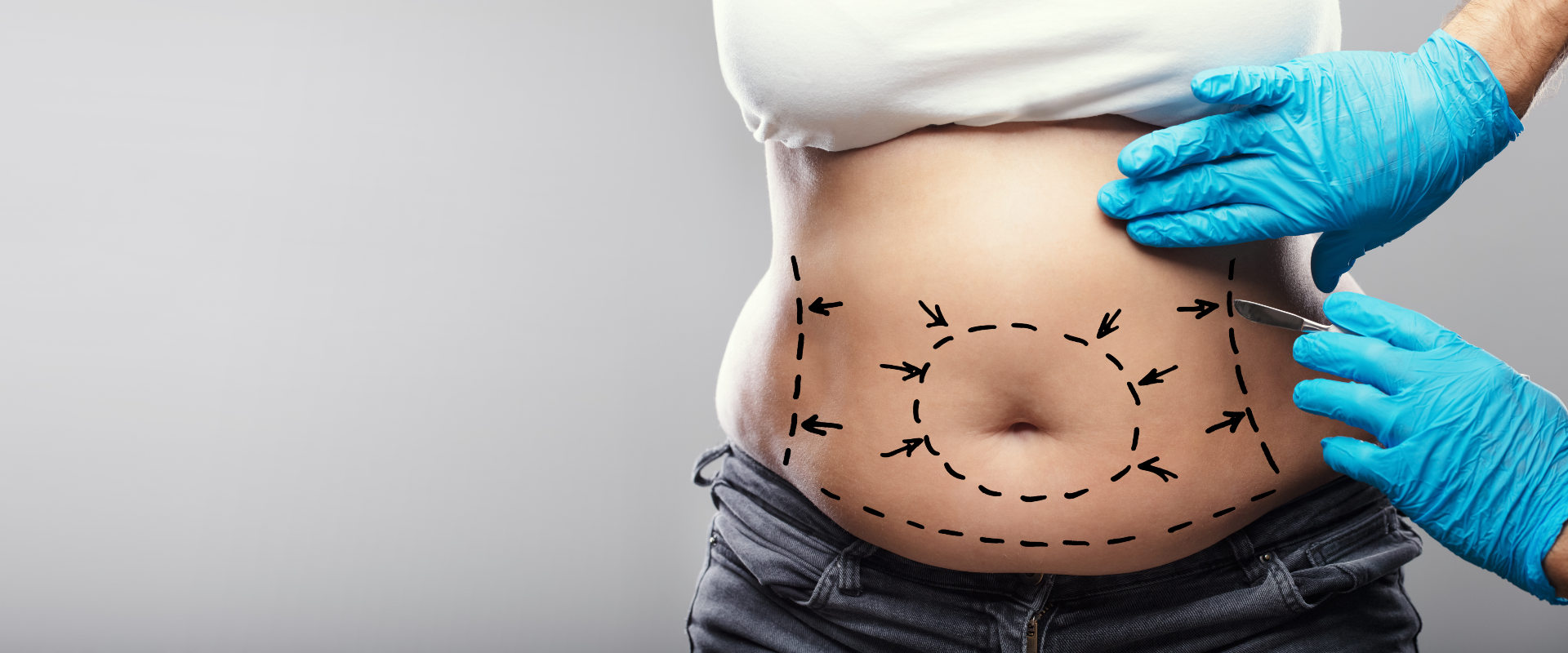
Medical Guide
Am I a Good Candidate for Liposuction? What Decides It
Liposuction candidacy turns on where the fat sits, skin elasticity, weight stability, health history and expectations. Here is how surgeons weigh each one.
Schedule a ConsultationAm I a Good Candidate for Liposuction? The Questions That Actually Decide It
Medically reviewed by Dr. In-Ho Khang, MD, Yonsei University College of Medicine; Chief Academic Director of Plastic Surgery, Korean Society of Aesthetic Surgery & Laser (KSASL)
If you are asking whether you are a candidate for liposuction, the answer does not come from a number on a scale. It comes from five separate assessments: where your fat actually sits, whether your skin will follow a new shape, whether your weight has stopped moving, what your medical history says about healing and anesthesia, and what you expect the result to be. A person can pass four of those and still be told to wait. This article works through each one and sets out what YONSEI LEEDS CLINIC in Seoul publishes about how it makes that call.
The Short Answer
Liposuction is a contouring operation, not a weight-loss treatment. That single sentence disqualifies more inquiries than anything else on this page.
The American Society of Plastic Surgeons states that liposuction is not a treatment for obesity or a substitute for proper diet and exercise, that it works for people of normal weight who have some extra fat, and that firm elastic skin produces better results. The StatPearls chapter on liposuction, on the National Library of Medicine's NCBI Bookshelf, opens with the same caution: it should not be portrayed as a weight loss procedure.
The useful question is therefore not "how much fat can be taken off." It is "is the thing that bothers me a localized deposit of fat under the skin, on a body whose weight I can hold, under skin that will shrink to the new contour?"
Question One: Is the Fat Somewhere Liposuction Can Reach?
Liposuction removes subcutaneous fat, the layer between your skin and your muscle. StatPearls describes the surgeon treating the deeper, loosely organized fat first and the thinner, denser superficial layer second, with caution near the surface because overtreatment there can produce contour irregularities. It also names zones of adherence, where the tissue is bound tightly to the fascia over the muscle, which surgeons avoid because suctioning them creates dents rather than curves.
What liposuction cannot reach is visceral fat, which sits inside the abdominal wall around the organs. A firm, protruding abdomen that does not soften when you relax often carries a substantial visceral component, and suctioning the thin subcutaneous layer over it changes very little. The practical test is the one a surgeon performs by hand: can the tissue be pinched and lifted away from the body wall, and does it move? Two people with identical measurements can get opposite answers.
YONSEI LEEDS CLINIC builds its service around this distinction. It offers what it calls Liposuction by Area, describes the target as excess subcutaneous fat in specific regions, and lists those as the abdomen, arms, thighs, calves, knees, flanks and love handles.
Question Two: Will Your Skin Follow the New Shape?
Liposuction reduces volume underneath your skin. Nothing in the operation tightens the skin itself, so whether the result looks smooth or deflated depends on how well your skin retracts over the smaller contour.
Cleveland Clinic lists firm, elastic skin with good muscle tone among the qualifications providers evaluate, and poor skin quality among the factors that may make someone unsuitable. It states that liposuction alone cannot improve saggy, loose skin. ASPS makes the same point from the other side: skin that is soft and thin from stretch marks, weight loss or aging will not reshape as well, and further surgery may be needed to remove and tighten it. StatPearls describes the ideal candidate as having minimal skin laxity.
Elasticity is influenced by age, genetics, sun exposure, smoking, pregnancy history and weight history. Cleveland Clinic notes that age by itself is not usually a deciding factor, while adding that skin past about sixty-five is often less firm.
YONSEI LEEDS CLINIC is direct about the limit here. It lists reasonable skin elasticity among the characteristics of a suitable candidate, and states elsewhere that some skin laxity cannot be resolved through liposuction or non-surgical treatment at all — the situation in which it describes a body lift as the relevant option instead.
Question Three: Has Your Weight Stopped Moving?
Contouring a body that is still changing size produces a result that will not hold.
StatPearls sets out the general surgical expectation: a patient's weight should be stable for six to twelve months before liposuction, and the ideal candidate is nonobese with minimal to moderately excessive adipose tissue. That interval is guidance from a clinical reference, not the policy of any particular clinic.
The reason is physiology. Liposuction permanently removes fat cells from the treated area, and YONSEI LEEDS CLINIC states that those cells do not regenerate. But the cells that remain can still enlarge. Cleveland Clinic states that liposuction does not prevent you from gaining weight and that your body can regrow fat where it was removed. Losing weight afterward creates the opposite problem, because it unmasks skin laxity that was hidden when the tissue underneath was fuller.
YONSEI LEEDS CLINIC names relatively stable weight among its candidate characteristics and lists unstable weight among the reasons surgery may be postponed. For its body line service it adds that people significantly above their target weight, people with unmanaged medical conditions, and people expecting surgery to replace healthy lifestyle change may not be appropriate candidates at that stage.
What About BMI? Where the Numbers Come From, and What They Miss
"Liposuction BMI requirements" is among the most searched phrases on this topic, and it deserves a careful answer rather than a threshold.
What published guidance actually says
ASPS describes ideal candidates as adults within thirty percent of their ideal weight who have firm elastic skin and good muscle tone. StatPearls uses a near-identical criterion: within thirty percent of normal body mass index. Cleveland Clinic instead lists a BMI over twenty-five among factors that might make someone not a candidate, alongside being underweight, having a condition that impairs healing, and having poor skin quality.
These do not agree with one another, and none is a rule. YONSEI LEEDS CLINIC does not publish a BMI cutoff or any numeric candidacy threshold.
Why a number alone does not decide it
BMI is a screening tool built for populations, not a measurement of body fat. The StatPearls chapter on body mass index states that BMI indicates the relative amount of body fat on a person's frame but does not directly calculate body fat percentage, that it overestimates fat in people with high lean mass such as athletes, and that it underestimates it in others. It also notes that BMI has no way to account for abdominal or visceral fat distribution — precisely the variable that matters most here. The same chapter notes that Asian populations have been found to show higher body fat at lower BMI values than white populations, and that the World Health Organization has published modified cut-off points as a result.
The clinic's own language reflects this. It describes suitable candidates as having BMI and general health appropriate for the procedure, rather than naming a figure.
Medical History That Changes the Answer
Elective surgery is judged against a different standard, because there is no clinical cost to declining it. StatPearls puts it sharply: liposuction is entirely elective, so the burden of proof that a patient is suitable lies with the surgeon.
Conditions that raise surgical risk
ASPS describes ideal candidates as healthy individuals without a life-threatening illness or conditions that can impair healing, and Cleveland Clinic lists serious conditions and conditions that make healing difficult among the reasons someone may not be a candidate.
YONSEI LEEDS CLINIC states that patients who are currently pregnant, who have active infections, or who have medical conditions affecting wound healing or anesthesia tolerance are not appropriate candidates. Its material separately names significant blood-flow problems, coronary artery disease, diabetes, weakened immunity, unstable health and unrealistic expectations as circumstances that may require further evaluation first. Circulation and immunity recur because liposuction creates a large area of injured tissue under intact skin, which heals from the inside.
Smoking, vaping and nicotine
ASPS lists nonsmokers and non-vapers among ideal candidates. StatPearls states that smoking cessation should begin at least four weeks before the procedure to maximize healing, and Cleveland Clinic notes that smoking slows wound healing and increases surgical risk. YONSEI LEEDS CLINIC likewise states that smoking and nicotine use can increase surgical risks and delay healing. Nicotine replacement products count, because nicotine itself constricts blood vessels.
Medications, supplements and clotting risk
StatPearls identifies deep vein thrombosis, a clot in a deep vein that can travel to the lungs as a pulmonary embolism, as the most serious complication of liposuction, and describes formal preoperative risk scoring as standard practice. ASPS lists it alongside cardiac and pulmonary complications among the risks of the operation.
The clinic advises patients not to stop prescribed medication without medical advice, but to disclose all medicines, vitamins, herbal supplements, alcohol and nicotine use, noting that aspirin, some anti-inflammatory drugs and certain supplements may increase bleeding risk and may need adjusting under supervision.
Pregnancy and breastfeeding
YONSEI LEEDS CLINIC states that patients who are currently pregnant are not appropriate candidates, and for its non-surgical fat treatments it names pregnancy and breastfeeding together. ASPS states that patients who are pregnant or breastfeeding should not have any of the nonsurgical fat reduction procedures.
Expectations Are a Clinical Criterion, Not a Formality
Both ASPS and Cleveland Clinic list expectations in the same breath as skin quality and general health. ASPS describes ideal candidates as individuals with a positive outlook and specific goals, and opens its candidacy guidance by saying the decision should be made for yourself rather than to satisfy someone else or match an image. Cleveland Clinic lists unrealistic expectations among the reasons a procedure could be unsuccessful.
There is a formal version of this concern. StatPearls reports that studies have found up to fifteen percent of patients seeking aesthetic surgery have body dysmorphic disorder, a condition in which someone holds a distorted view of their appearance in the absence of any obvious abnormality, and states that such patients should not proceed to surgery until a mental health professional has evaluated them. The StatPearls chapter on the condition adds that affected patients often seek cosmetic surgery, that it is ineffective for them, and that systematic screening is recommended in cosmetic settings.
The everyday version is scale: liposuction reshapes a region, it does not restyle a body. The clinic quotes Dr. In-Ho Khang: "A thorough understanding of each patient's anatomy is essential when planning body-contouring procedures."
Who Should Be Redirected, and to What
Being told no is often a redirection rather than a rejection. Five patterns account for most.
Loose skin is the dominant problem. If what bothers you hangs, folds, or empties when lifted, removing the fat underneath usually makes it look emptier. Cleveland Clinic describes excess skin removal — panniculectomy, tummy tuck, arm lift, lower body lift, thigh lift — as the category for this, and lists maintaining a goal weight for at least six months after major weight loss among its candidacy criteria. YONSEI LEEDS CLINIC offers body lift surgery for this purpose and states explicitly that it is not a weight-loss procedure.
Weight is well above target. Cleveland Clinic advises anyone carrying excess weight to discuss weight management options with a healthcare professional first — a redirection to medical care, not a dismissal.
The deposit is small and surgery is not wanted. ASPS describes non-surgical fat reduction — cryolipolysis, injection lipolysis, radiofrequency and laser lipolysis — as options for patients unwilling or unable to undergo surgery, while stating clearly that none of them replaces liposuction. YONSEI LEEDS CLINIC offers fat dissolving injections, describes them as suited to adults at or near their target weight with localized pockets of stubborn fat, and states that it may redirect unsuitable candidates after consultation.
A man's chest fullness may not be fat. Cleveland Clinic distinguishes gynecomastia, a benign increase in glandular breast tissue in males usually driven by an imbalance of testosterone and estrogen, from pseudogynecomastia, where the enlargement comes from excess fat. It notes that gynecomastia can be a symptom of thyroid, liver, kidney, pituitary, adrenal or testicular conditions, or a side effect of many medications, and that examination matters because male breast cancer, though rarer, can also cause a lump. Glandular tissue does not respond to suction the way fat does.
The concern is cellulite. Cleveland Clinic states that liposuction does not remove cellulite, because the dimpling comes from fibrous bands rather than fatty tissue.
How YONSEI LEEDS CLINIC Says It Assesses Candidacy
The clinic publishes its assessment sequence, and it maps onto the questions above.
It describes a one-on-one consultation with Dr. In-Ho Khang covering goals, medical history, body composition and lifestyle, followed by a clinical assessment of fat distribution, skin elasticity and body proportions. It states that pre-operative photographs may be taken for planning, and that a personalized plan is then developed covering treatment areas, technology, anesthesia and procedure scope. For its body line service it describes a three-dimensional body analysis, plus blood work and health screening to confirm suitability.
On the operation, the clinic states that liposuction may be performed under local or sedation anesthesia depending on scope and patient preference, and gives an approximate treatment time of one to two hours per area. It describes using EVA-assisted liposuction with a system it calls AIRS. That is the clinic's own description of its equipment; a device marketed in Korea has been reviewed under Korean law, which is a real process but is not a US authorization and does not mean the FDA has assessed it.
Where several regions are involved, the clinic states that full-body treatment is deliberately staged to support surgical safety and a manageable recovery. That is a candidacy statement in itself: the answer may be yes to some areas now, others later.
Dr. Khang is described by the clinic as a board-certified specialist. That is the clinic's own statement, and its materials do not name the issuing board. Korea has no public individual specialist registry a US reader can search, so the honest step is to ask to see the certificate at consultation. His role as Chief Academic Director of Plastic Surgery at the Korean Society of Aesthetic Surgery & Laser is a society position — a real credential, but a different one. His background appears on the clinic's doctor profile page.
What the Clinic Does Not Publish
Naming the gaps is part of an honest answer.
YONSEI LEEDS CLINIC does not publish candidacy cutoffs of any kind — no BMI threshold, no age range, no maximum removal volume, no weight-stability interval. It does not publish case volumes, procedure numbers, years of experience, or a revision policy. It does not publish which photographs or documents an international patient must submit for a liposuction assessment, nor travel logistics, accommodation, a minimum stay, flight timing or payment arrangements, and its liposuction page does not set out a detailed monitoring protocol.
None of that is disqualifying. It is a list of questions to ask before you commit.
Being Assessed From Another Country
A remote assessment can begin the process but cannot finish it, because the two most decisive variables — how the fat behaves under a hand and how the skin retracts when released — are physical findings.
The clinic states that online consultations and English-speaking support for international patients are available, that in-person consultations are paid, and that its inquiry route is its online consultation and contact page. Published hours are Monday through Friday from 10:30 in the morning to 8:00 in the evening, and Saturday from 10:00 to 4:00, Korean time. Seoul runs roughly 13 to 17 hours ahead of the continental United States, so one side of any live conversation is working outside normal hours.
The CDC's Yellow Book chapter on medical tourism is worth reading first. It advises discussing the plan for handling complications with both your own physician at home and the clinician performing the procedure, checking what your domestic insurance covers abroad, and requesting copies of overseas medical records in English. It also states that medical tourists should not fly for ten days after chest or abdominal surgery, and that travel after surgery raises clot risk.
The clinic holds a Korean registration as a Medical Institution for Attracting Foreign Patients, issued by the Ministry of Health and Welfare. That permits treatment of foreign patients. It is not a quality accreditation, not a US-recognized credential, and says nothing about candidacy.
Questions That Show Whether You Have Been Properly Assessed
Ask these, and listen to how specific the answers are.
- Which regions are you proposing to treat, which are you leaving alone, and why?
- What did you find when you examined my skin, and what will it do once the volume is reduced?
- Is any part of my concern skin rather than fat, or visceral rather than subcutaneous?
- What weight do you want me at, and how long stable before surgery?
- Which of my medications or supplements need to change, and when?
- If you would not operate on me today, what would need to be different?
Cleveland Clinic publishes a similar consultation list, including board certification, training, technique, risks and recovery time.
The Bottom Line
- Liposuction is a contouring procedure for localized subcutaneous fat, not a weight-loss treatment; ASPS, Cleveland Clinic and StatPearls all state this directly.
- Skin elasticity is decisive. Removing volume under a lax skin envelope tends to deflate rather than shape, and the clinic itself states that some laxity cannot be resolved by liposuction.
- Published US guidance describes candidates as within roughly thirty percent of ideal weight, with weight stable for six to twelve months beforehand. These are general reference points, not clinic policy — YONSEI LEEDS CLINIC publishes no numeric cutoff.
- Smoking or vaping, unstable health, conditions affecting healing or anesthesia tolerance, pregnancy, active infection and unrealistic expectations are recognized reasons to postpone or decline.
- Being redirected to skin-removal surgery, weight management, a non-surgical option, or a workup for gynecomastia is a normal outcome of careful assessment.
Frequently Asked Questions
Is there a maximum weight or BMI for liposuction?
There is no single universal threshold. ASPS describes ideal candidates as adults within thirty percent of their ideal weight, StatPearls uses within thirty percent of normal BMI, and Cleveland Clinic lists a BMI over twenty-five among factors that may make someone unsuitable. These general US reference points do not fully agree. YONSEI LEEDS CLINIC publishes no numeric cutoff, describing instead a BMI and general health suitable for the planned procedure.
Can liposuction help me lose weight?
No. Cleveland Clinic states that liposuction is not a full-body weight-loss method and does not treat obesity, and StatPearls states it should not be portrayed as a weight loss procedure. Any change on the scale is incidental to the volume removed.
How do I know whether my problem is fat or loose skin?
A surgeon determines this by lifting and releasing the tissue and watching how it settles, and by checking whether folds persist when you stand upright. Tissue that feels soft and empties when lifted is largely skin; tissue that stays dense and full has fat volume in it. Most people have some of both, which is why an examination settles it and photographs do not.
I have a firm belly that will not shrink. Am I a candidate?
Possibly not, for anatomical reasons rather than anything to do with effort. Liposuction reaches only the subcutaneous fat beneath the skin; fat stored inside the abdominal wall cannot be suctioned. A firm abdomen that does not soften or pinch easily often has a good deal of that deeper fat.
Does smoking really disqualify me, or is it just advice?
ASPS lists nonsmokers and non-vapers among ideal candidates, and StatPearls states that smoking cessation should begin at least four weeks before the procedure to improve healing. Nicotine narrows blood vessels, and liposuction depends on blood supply to a large area of injured tissue. Many surgeons treat continued nicotine use as a reason to postpone, and replacement products count.
Can I be assessed for candidacy online before flying to Seoul?
Partly. YONSEI LEEDS CLINIC states that online consultations and English-speaking support for international patients are available, and a remote review can cover your goals, medical history and general suitability. But skin elasticity and fat character are physical findings, so a final answer waits for an examination. The clinic does not publish which photographs or documents are required.
If I am told no, what should I ask next?
Ask what specifically ruled you out, whether it is permanent or temporary, and what would have to change for the answer to become yes. A weight target, a smoking cessation interval, a condition to stabilize, or a different procedure entirely are all common answers. YONSEI LEEDS CLINIC states that unsuitable candidates may be redirected to a more appropriate treatment following consultation.
This article is for general informational purposes and does not constitute individualized medical advice, and it is not a self-diagnosis tool. Surgical candidacy, technique, and expected outcomes can only be determined through a consultation with a qualified plastic surgeon.
More Articles
Continue reading our clinical guides.
Why Korea Body Contouring Prices Stay Low Despite Global Inflation Rise
While global inflation has driven up the cost of surgical procedures in many Western markets, Korean body contouring clinics have maintained stable pricing through efficiency and modern liposuction protocols.
Learn More
Breast Fat Grafting Costs: Korea vs Japan Price Comparison 2026
Autologous breast fat grafting uses a patient's own fat cells to enhance breast volume and shape. Compare 2026 breast fat grafting costs and SVF systems in South Korea vs Japan.
Learn More
Body Lift Efficacy: 90% Satisfaction in Korean Reconstruction Studies
The human body undergoes profound structural modifications following significant weight loss, childbirth, or natural structural aging. Learn how high-precision body lift surgery in Korea achieves 90% patient satisfaction.
Learn More